Salina Animal Shelter Study Session: City says Puppy Euthanasia Incident Would be Handled Differently Now
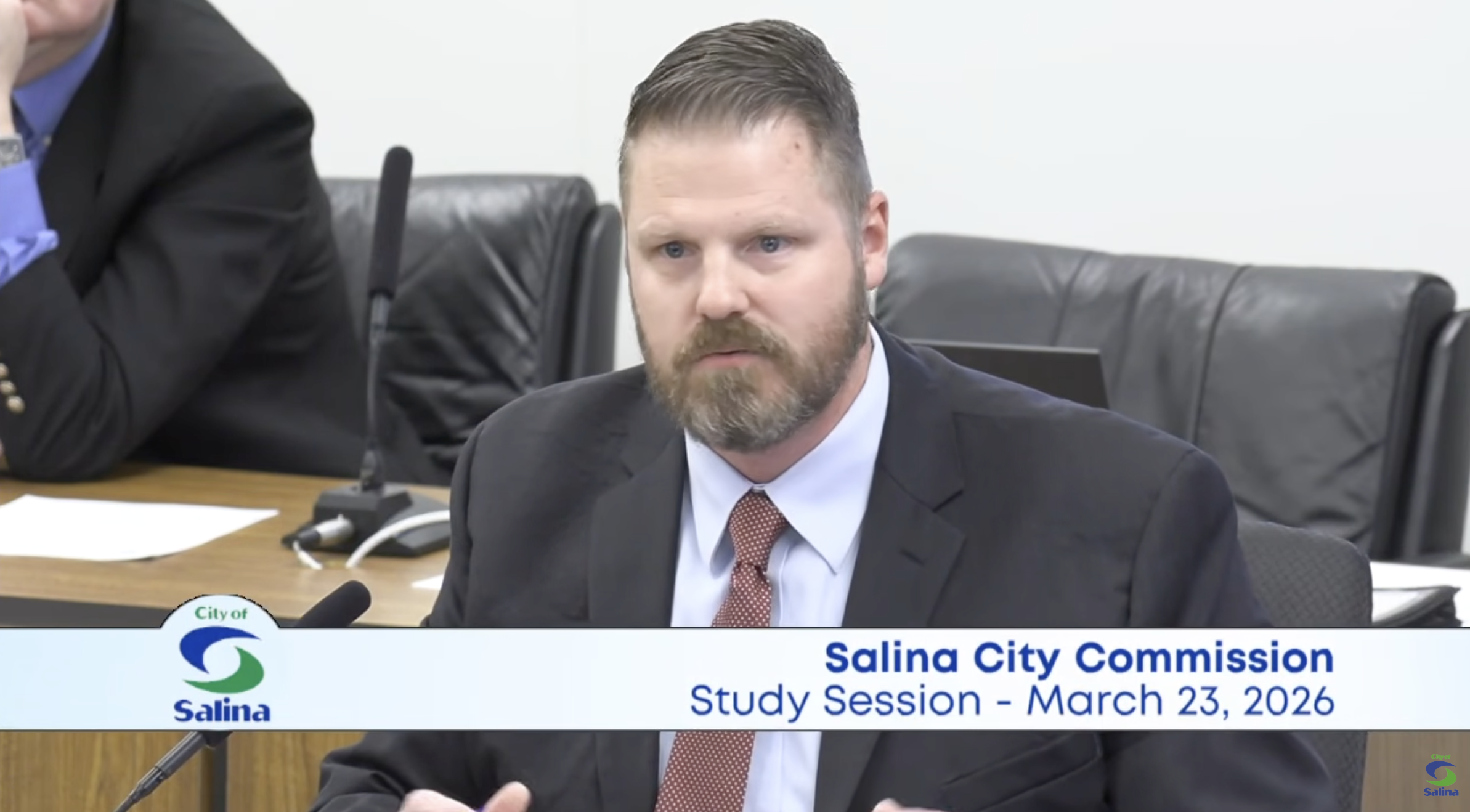
Salina city officials on Monday publicly discussed a Dec. 16, 2025 incident involving three stray puppies that tested positive for parvovirus at the Salina Animal Shelter, saying staff acted quickly out of concern for disease spread but acknowledging the euthanasia procedure should have been handled differently.
The discussion comes as public concerns continue following the incident, which has been raised repeatedly at Animal Shelter Advisory Board meetings and Salina City Commission meetings, prompting ongoing questions about euthanasia procedures, veterinary oversight, staff training and shelter policy.
According to city staff, the three puppies entered the shelter on Dec. 16 as strays showing symptoms of diarrhea. Officials said the puppies were severely dehydrated, very lethargic, somewhat unresponsive and very small.
“Puppies presented with symptoms of diarrhea,” staff said during the presentation. “They were severely dehydrated, very lethargic, to the point of being somewhat unresponsive. They were very small.”
Staff said the puppies tested positive for canine parvovirus using an IDEXX SNAP parvo test. Officials described parvovirus as a highly contagious and life-threatening disease that can be fatal within 48 to 72 hours, particularly in puppies.
City staff said shelter workers believed urgent action was necessary to prevent the spread of the confirmed virus inside the shelter.
“Staff determined the best course of action was to act urgently, urgently to avoid the spread of the confirmed parvo virus,” the presentation stated.
According to the city, the shelter’s usual euthanasia process is intravenous injection unless a vein cannot be found. In this case, staff said they were unable to find a vein because of the puppies’ dehydration and instead chose the intraperitoneal method, meaning euthanasia solution was intended for the abdominal cavity.
“Staff performed the euthanasia procedure with the intent of providing euthanasia solution to the abdominal cavity,” staff said.
The presentation also outlined three euthanasia methods commonly referenced at the shelter: IV, or intravenous; IP, or intraperitoneal; and IC, or intracardiac.
During the same broader controversy, Dr. Melissa Juby, DVM, told Salina311 the shelter’s standard operating procedure is based on a national reference manual.
“The standard operating procedure for humane euthanasia I created is based off the HSUS's Euthanasia Reference Manual - just want to clarify I didn't author this guidebook.”
She also explained the euthanasia methods she considers preferred and when intracardiac euthanasia is acceptable.
“Intravenous or intraperitoneal are the preferred methods of euthansia. Intracardiac is an approved method, but only in unconscious animals.”
That statement is significant because city staff said Monday that shelter workers intended to use the intraperitoneal method on the puppies after being unable to locate a vein, while Dr. Juby has said she was later told a heart-stick procedure had been used under circumstances she did not approve.
Dr. Juby told Salina311 that after learning what had been reported to her about the incident, she emailed Parks & Recreation Director Jeff Hammond, Operations Superintendent Andrea Murphy and Animal Services Manager Monique Hawley within about one hour to express frustration and concern regarding the reported use of a heart-stick procedure to euthanize the puppies. She said that method, as described to her, was not approved under those circumstances and was reportedly done without sedation.
That account differs from the city’s public explanation Monday, in which staff said the euthanasia was performed with the intent of providing euthanasia solution to the abdominal cavity.
City staff did say no sedation was used before the puppies were euthanized.
Later in the discussion, officials said the procedure was performed in the shelter lobby, although the lobby was closed to the public at the time.
City Manager Jacob Wood said that if the same situation happened today, the shelter would handle it differently.
“Well, honestly, at this point, if it happened today, we would have to do that,” Wood said when asked how the shelter would respond now. “We would probably take them off site and find, find a vet to do that, because our vet is not there all the time.”
Wood also said the puppies were not taken farther into the facility before the procedure was performed.
“We didn’t take them on into the facility,” Wood said. “We did. We perform the procedure right there, kind of in the lobby. It was closed to the public, but it probably shouldn’t have been done out in the open. We should have taken them back into the facility and taken care of it.”
Wood said the city now believes the incident should have been handled differently.
“There were some concerns about the way that we performed that euthanasia,” Wood said. “We probably should have done it a little bit differently. Maybe we should have sedated them.”
He later added, “We recognize that that probably wasn’t done appropriately, that we could probably do that differently.”
One commissioner pushed back on that phrasing and said the issue should be stated more directly.
“I just want to clarify, Jacob, when you say maybe we should have done it different, or we probably should have done it different, I think we all can agree we should have, should have been handled. It should have been, should have been handled completely different,” the commissioner said.
Another city official responded that Salina wants to exceed the minimum legal threshold going forward.
“When we say it should have been done differently and appropriately, we want to hold ourselves to better than just the minimal legal standard,” the official said. “We want to do it a best practice standard. So we do think that we met the minimal legal standard, but we do want to make sure going forward, that we’re hitting higher than that and more of a best practice standard at the animal shelter.”
During the commission discussion, a commissioner asked who trained shelter staff to perform euthanasia. Staff said the shelter’s veterinarian had provided that training, and when asked specifically if that was Dr. Juby, staff confirmed it was.
“Our veterinarian, our contractor veterinarian,” staff said. When a commissioner followed up, “Dr. Juby, correct,” staff replied, “Correct.”
A separate question from a commissioner addressed what sedative would be used in a similar situation involving a small kitten if IV access could not be obtained. Staff said the shelter uses a ketamine and xylazine mixture for sedation, but added that sedation is “not required” and is “just a recommendation.”
Dr. Juby told Salina311 that after she learned what had been reported to her, she directed that, for the time being, no Salina Animal Shelter staff should administer euthanasia and that euthanasia procedures should instead be performed by her or another licensed veterinarian while the matter is being addressed.
That also aligns in part with the city’s current position. Officials told commissioners that shelter staff are no longer performing euthanasia.
“Currently, staff are not performing euthanasia,” staff said during the presentation. “We are working through that with the states. We’re getting trained up. We’re getting better documentation of training efforts, and we will not be euthanizing until the state is satisfied.”
Wood repeated that point later in the discussion.
“Today, no staff members are performing any euthanasia at all,” he said. “It’s only veterinarians from the community or our on-staff veterinarian.”
Wood also said Dr. Juby was informed about the Dec. 16 incident and later met with shelter staff.
“Our veterinarian, Dr. Juby, was made aware of the situation, and we met with her,” Wood said. “I wasn’t involved with that meeting, but she met with staff within a couple of days of that happening, and said, ‘Hey, these are some things that we think you guys could do better.’”
Dr. Juby’s account to Salina311 goes further. She said she contacted Hammond, Murphy and Hawley within about an hour of learning what had been reported to her and expressed frustration and concern at that time.
Following the incident, the shelter was temporarily closed for additional cleaning and to reduce the risk of parvovirus spreading inside the facility, officials said.
“We also, after that incident, we did close the facility down just to make sure that we were doing some extra cleaning and make sure that we didn’t have any spread of parvo virus,” Wood said. “I mean, it’s a it’s very contagious. It’s not something that we want.”
City officials also drew a distinction between the Dec. 16 puppy incident and the shelter’s Jan. 12, 2026 state inspection.
According to the city, the Jan. 12 inspection resulted in an unsatisfactory rating, but all cited items were classified as severity level one. Staff said those issues included food storage, the condition of some water containers, documentation problems related to euthanasia records, concerns about euthanasia procedures, staff training, corresponding documentation and documenting veterinary care for specific animals.
At that time, the Kansas Department of Agriculture recommended the shelter halt staff-performed euthanasia and instead have euthanasia conducted by a veterinarian.
However, Wood said the three puppies were not specifically identified in that inspection report.
“I do just want to mention with this, this inspection report did not mention those three puppies,” Wood said. “They were not listed on that inspection report. The state has not said anything to us about these three puppies.”
Even so, the broader questions raised by the incident and subsequent inspection have kept public attention on shelter euthanasia practices, training and oversight.
Salina311 previously contacted Andrea Murphy on Feb. 10 seeking comment and clarification related to allegations about euthanasia methods and sedation. Salina311 did not receive a response.
Salina311 also received allegations that Dr. Juby had lost her license to practice veterinary medicine. Those allegations are false. Dr. Juby provided verification that her license remains current, and Banfield Pet Hospital also confirmed her credentials are active and up to date.
At another point in the discussion, Wood said the city cannot undo what happened, but is trying to learn from it.
“Hindsight is 20/20,” Wood said. “We can’t redo it, we can’t take it back, but we certainly would have done it differently had we had to do it today.”
The city told commissioners it is continuing to work with the state and veterinary partners on training, documentation and compliance, and that shelter staff will not resume euthanasia duties unless and until the state is satisfied.
Receive Local Information Like This In Your Inbox
Stay informed with stories and updates from your community