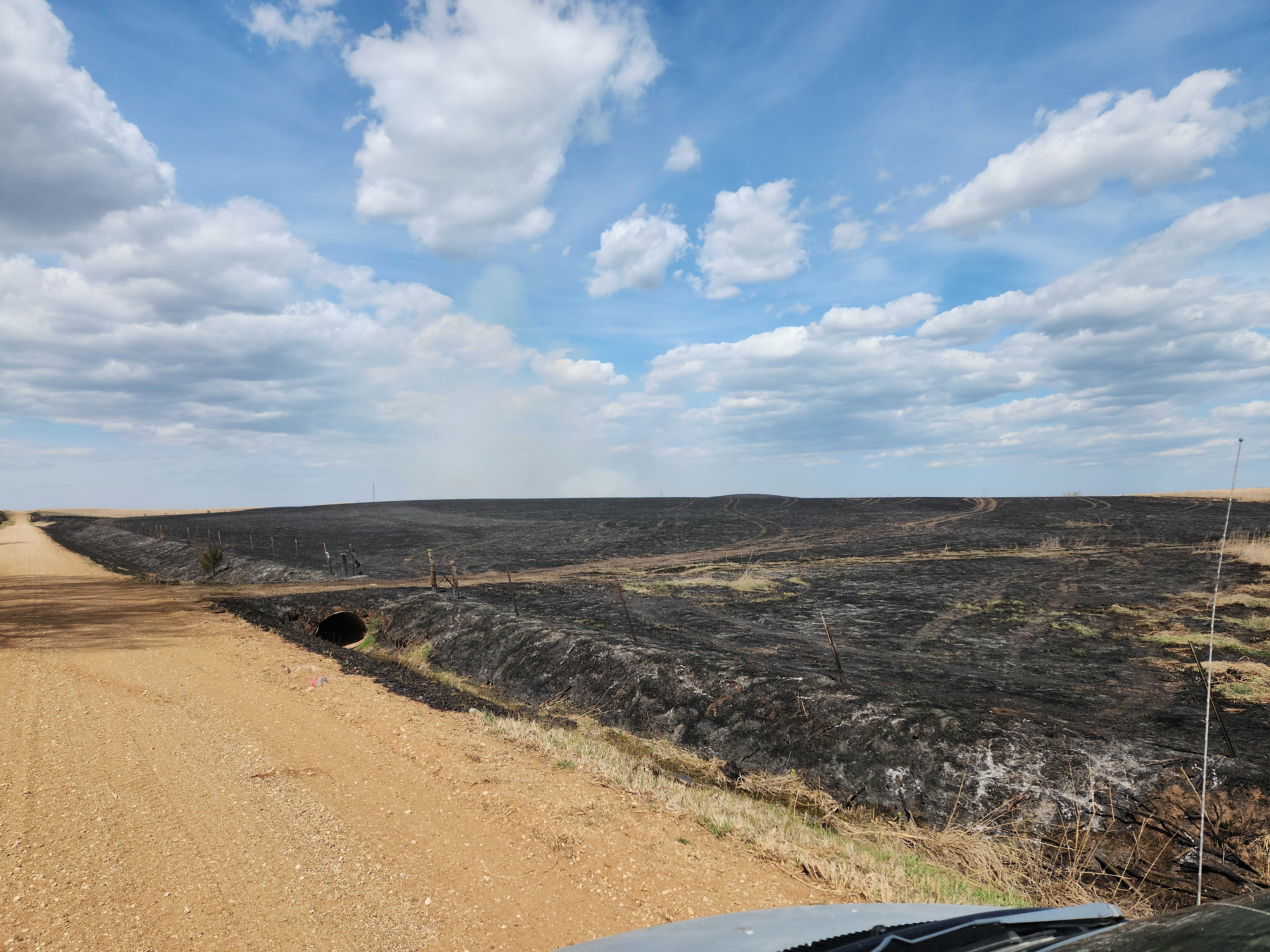
Smoke on the Prairie: Why Spring Burning Is Part of Kansas Agriculture
Every spring in Kansas, columns of smoke rise above pastures and grasslands, and for people unfamiliar with the practice, it can look alarming.
But in much of Kansas, especially in prairie and ranch country, spring burning is not random and it is not simply land being cleared. It is a long-used management practice tied to the health of the prairie, the needs of livestock producers, and the larger agricultural cycle that drives the state each year. In the Flint Hills and other native grass areas, prescribed fire is used to help preserve tallgrass prairie, control invasive species, reduce woody encroachment from plants like eastern red cedar and sumac, and improve forage for cattle.
That timing matters.
Kansas officials note that the bulk of tallgrass prairie burning generally happens in early to mid-April, when land managers are preparing pasture for the growing season ahead. Research from Kansas State University has found that properly timed spring burns help warm the soil more quickly, encourage new growth, and support the warm-season grasses that dominate native range. Long-term K-State research has also shown that annual spring burning does not reduce overall forage yield when timed correctly, while land left unburned over time sees increasing woody plant invasion.
In plain terms, fire helps reset the pasture.
It clears away old plant material, opens the ground to sunlight, and gives new grass a cleaner start. For ranchers, that means stronger grazing conditions as cattle move onto spring and summer pasture. In a state where beef production and grassland management remain central to the rural economy, that makes spring burning less about spectacle and more about setting up the season’s productivity. It is not the harvest itself, but it is part of the work that helps determine what the land can produce before harvest and grazing season fully unfold.
There are also practical benefits beyond grass growth.
Kansas State University has reported that spring burning can reduce horn fly populations by as much as 40%, and researchers have also found lower early-season tick burdens on cattle grazing burned pastures. That gives producers another reason to use fire as a tool, especially in areas where insect pressure affects animal health and weight gain.
There is also a deep Kansas history behind it.
K-State notes that prescribed fire in the Flint Hills predates modern ranching and reaches back to Native peoples’ care for the land. Today’s spring burns continue that long relationship between fire, grass, and grazing on one of the largest remaining tracts of unplowed tallgrass prairie in North America. In that sense, spring burning is not a modern gimmick or a careless habit. It is one of the oldest land-management practices still shaping the Kansas landscape.
That does not mean there are no downsides.
Kansas health and environmental officials regularly warn that smoke from spring burns can affect air quality in downwind communities. KDHE has said March and April are the peak months for Flint Hills burning and has urged land managers to use smoke modeling tools and burn-management practices to reduce health impacts. The state’s smoke management plan exists precisely because fire remains useful for the land while also creating real air-quality concerns for the public.
So when fields and pastures light up in spring, what people are seeing is not just smoke.
They are seeing one of Kansas agriculture’s oldest rhythms: land being prepared for the growing season, ranchers managing grass for cattle, and a prairie ecosystem being maintained the way it has been for generations. It may look dramatic from the highway, and it certainly photographs well, but in Kansas, spring burning is less about destruction than renewal.