
Juby and Reynolds Interviews Offer Added Detail as Charges Are Filed, Two Put on Leave in Salina Animal Services Case
The Dec. 16 incident and Dr. Juby’s account
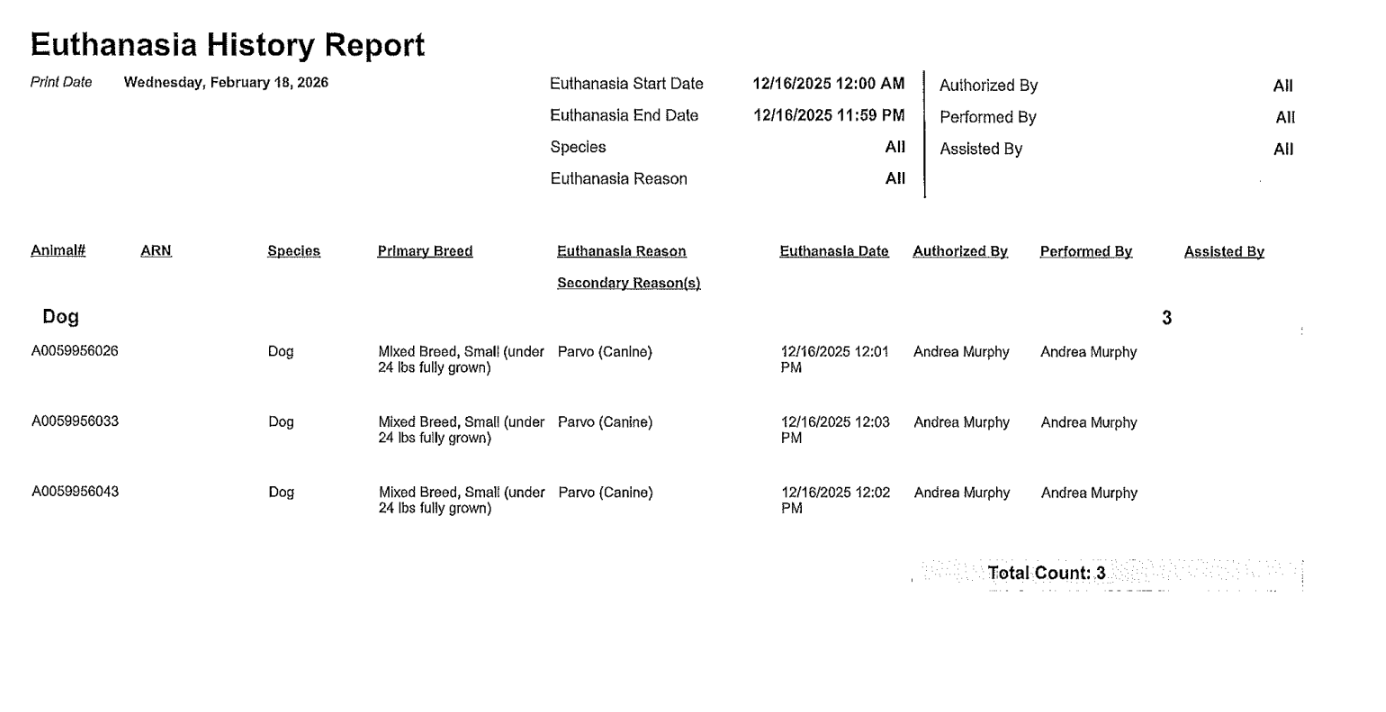
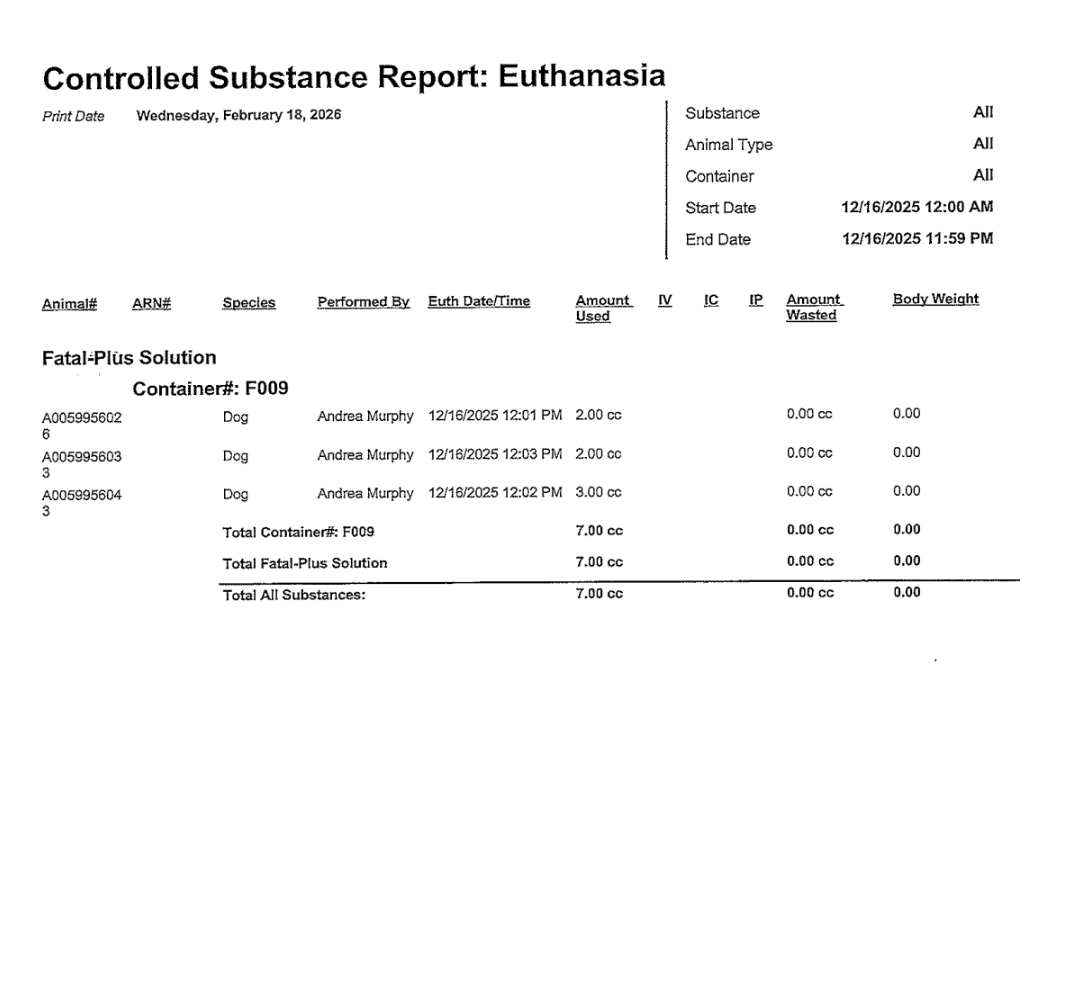
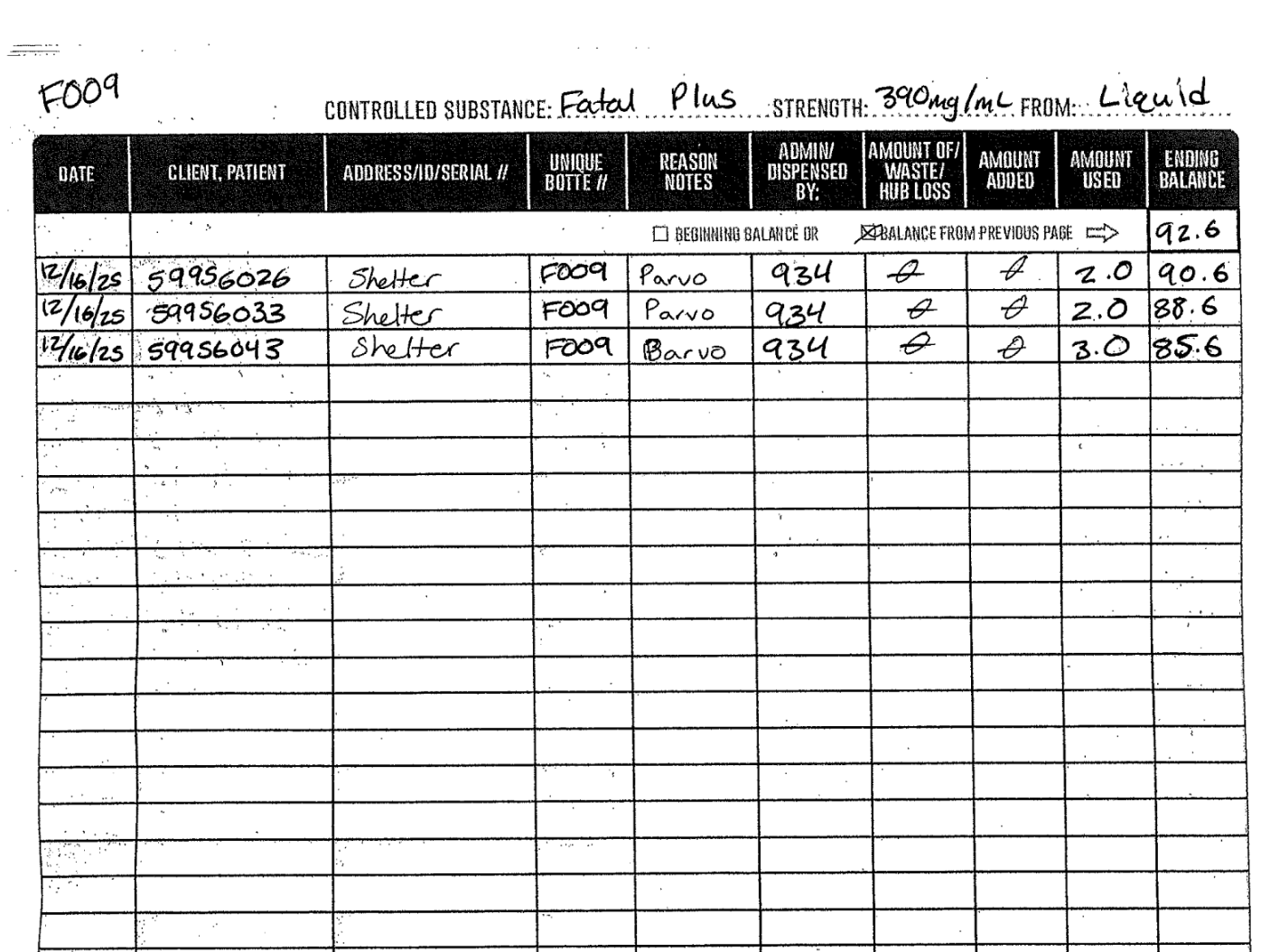
Public scrutiny over the Salina Animal Shelter intensified over several months following the Dec. 16, 2025 euthanasia of three stray puppies that tested positive for parvovirus, building from veterinary concerns and conflicting public explanations to a disputed email, requested animal cruelty charges, and administrative leave for two city employees.
The chain of events begins with what contracting veterinarian Dr. Melissa Juby told Salina311 after the incident came under public scrutiny. Juby said the shelter’s euthanasia protocol was not something she invented on her own, but one based on a national reference.
“The standard operating procedure for humane euthanasia I created is based off the HSUS's Euthanasia Reference Manual - just want to clarify I didn't author this guidebook.”
Juby also drew a clear line between the methods she said are preferred and the circumstances under which intracardiac euthanasia can be used.
“Intravenous or intraperitoneal are the preferred methods of euthansia. Intracardiac is an approved method, but only in unconscious animals.”
According to Juby, after learning what had been reported to her about the three puppies, she emailed Parks & Recreation Director Jeff Hammond, Operations Superintendent Andrea Murphy, and Animal Services Manager Monique Hawley within about one hour to express frustration and concern over what she said was a reported heart-stick procedure done without sedation and under circumstances she did not approve.
Juby told Salina311 she also directed that, for the time being, no Salina Animal Shelter staff were to administer euthanasia, and that euthanasia procedures instead were to be performed by her or another licensed veterinarian while the matter was being addressed.
The city’s public explanation
That account became central because it differed in important ways from the city’s later public explanation.
When city officials discussed the Dec. 16 incident publicly, they said the three puppies entered the shelter as strays showing symptoms of diarrhea, were severely dehydrated, lethargic, somewhat unresponsive, and very small.
“Puppies presented with symptoms of diarrhea,” staff said during the presentation. “They were severely dehydrated, very lethargic, to the point of being somewhat unresponsive. They were very small.”
Staff said the puppies tested positive for canine parvovirus using an IDEXX SNAP test and that urgent action was taken out of concern for disease spread inside the shelter.
“Staff determined the best course of action was to act urgently, urgently to avoid the spread of the confirmed parvo virus,” the presentation stated.
City staff said the shelter’s usual euthanasia process is intravenous injection unless a vein cannot be found. In this case, officials said staff were unable to find a vein because of the puppies’ dehydration and instead performed the procedure “with the intent of providing euthanasia solution to the abdominal cavity.”
Staff also said no sedation was used.
That public explanation stood in tension with Juby’s statement that she had been told a heart-stick procedure was used in a way she did not approve and without sedation.
Acknowledgment that the procedure should have been handled differently
City Manager Jacob Wood later acknowledged publicly that the incident should have been handled differently.
“There were some concerns about the way that we performed that euthanasia,” Wood said. “We probably should have done it a little bit differently. Maybe we should have sedated them.”
He later added, “We recognize that that probably wasn’t done appropriately, that we could probably do that differently.”
In the same discussion, a commissioner pushed for stronger language, saying the matter “should have been handled completely different.”
Another city official said the city wanted to move beyond the minimum legal threshold.
“When we say it should have been done differently and appropriately, we want to hold ourselves to better than just the minimal legal standard,” the official said. “We want to do it a best practice standard. So we do think that we met the minimal legal standard, but we do want to make sure going forward, that we’re hitting higher than that and more of a best practice standard at the animal shelter.”
Training, sedation and the pause on staff euthanasia
The city also confirmed publicly that Juby was the veterinarian who trained shelter staff to perform euthanasia.
“Our veterinarian, our contractor veterinarian,” staff said. When a commissioner followed up, “Dr. Juby, correct,” staff replied, “Correct.”
During the same discussion, staff said the shelter uses a ketamine and xylazine mixture for sedation in similar situations, but added that sedation is “not required” and is “just a recommendation.”
At the same time, officials said shelter staff were no longer performing euthanasia.
“Currently, staff are not performing euthanasia,” staff said during the presentation. “We are working through that with the states. We’re getting trained up. We’re getting better documentation of training efforts, and we will not be euthanizing until the state is satisfied.”
Wood echoed that position, saying, “Today, no staff members are performing any euthanasia at all. It’s only veterinarians from the community or our on-staff veterinarian.”
Wood also said Dr. Juby had been informed of the Dec. 16 incident and later met with shelter staff.
“Our veterinarian, Dr. Juby, was made aware of the situation, and we met with her,” Wood said. “I wasn’t involved with that meeting, but she met with staff within a couple of days of that happening, and said, ‘Hey, these are some things that we think you guys could do better.’”
Juby’s account to Salina311 went further, stating that she contacted Hammond, Murphy and Hawley within about one hour and directed that shelter staff stop performing euthanasia while the matter was being addressed.
The withheld email and the records dispute
As public concern grew, attention also turned to a specific email tied to the immediate response after the puppy incident.
Salina resident Susan Nickel filed a Kansas Open Records Act request seeking email communications and attachments exchanged between Juby, Murphy, Hawley, and Hammond from Dec. 10, 2025, through Feb. 28, 2026.
According to the city’s written responses, one email was initially withheld as a veterinary record. Later, the city changed its position. In a March 27 response, City Attorney Patrick Hoffman wrote:
“Last Friday, March 20th, I indicated that one of the records you requested was not disclosed as a veterinary record. I have reviewed that record and no longer have that view.”
Instead, the city said it was withholding the record under KORA exemptions related to individually identifiable personnel information and internal communications in which opinions are expressed or policies or actions are proposed. The city also said the email could not be reasonably separated and redacted for release.
“The City has also determined that the record cannot be reasonably segregated and redacted in a manner that would permit disclosure of non-exempt material without revealing protected information,” Hoffman wrote.
After Nickel pushed for a redacted version, Hoffman responded again.
“In this instance, the entirety of this email pertains to identifiable individual personnel,” Hoffman wrote. “The City has determined that redaction is not feasible in a manner that would sufficiently de-identify the individuals involved. Accordingly, disclosure of the records, even in redacted form, would not adequately protect the privacy interests recognized under KORA.”
Nickel later filed a complaint with the Kansas Attorney General, arguing that withholding the email in its entirety violated the Kansas Open Records Act.
The email dispute mattered because the record appears tied to the same period Juby described when she said she contacted Hammond, Murphy, and Hawley within about an hour of learning what had been reported to her.
What John Reynolds said about obtaining the email
Questions then shifted to what would happen if investigators believed the email was relevant.
Salina311 confirmed that City Commissioner Doug Rempp was denied access when he asked to review the email. Salina311 also investigated an unconfirmed report that the same email may have been withheld from Investigator Trower of the Saline County Sheriff’s Office, though that was not confirmed.
After being directed to the Saline County Attorney’s Office, Saline County Attorney John Reynolds said he had not yet received a report on the matter to review. But he also explained the legal path available if investigators later determined they needed the document.
“If it’s something we need, the Saline County Attorney can seek a court order,” Reynolds said.
He said that process is routine.
“Generally, we do this several times a week, going for records off a telephone or account, and we get that order to release that, whether they like that or not,” Reynolds said.
Reynolds compared the process to a search warrant or inquisition.
“It’s an inquisition. We say what we want and why we want it. It’s much like a search warrant,” he said.
According to Reynolds, investigators would need to present a prima facie case to a judge.
“Prima facie case. These are the facts that we have, this is what we think, and this is how it affects this case,” Reynolds said.
He added that the request would be presented privately.
“It is delivered to the judge in camera (meaning in private). It’s not a matter of record,” Reynolds said.
“The judge will review it in that case and decide if it is relevant.”
Reynolds’ comments did not mean the county had already moved to compel the email at that time. But they showed that if investigators determined the document was important, a judge could be asked to review whether it should be turned over.
The fight over board oversight
As the controversy continued, a separate dispute surfaced over the role of Salina’s Animal Control Advisory and Appeals Board.
During a recent meeting, Murphy said future discussions needed to stay focused on animal control policy, ordinances and enforcement rather than shelter operations. Referring to language read at the start of the meeting, Murphy told the board, “So I added this in here as a reminder that the role of this board is advisory in nature, focused on animal control policy, ordinances and enforcement, we need to keep discussions aligned with that scope so that we can be as effective as possible.”
Later in the meeting, she added, “I want to remind you that moving forward, after today, we are refocusing with the purpose of this board, which is animal control policy, ordinances and enforcement, not shelter operations.”
Citizen board members pushed back, arguing the shelter could not be separated from the issues driving public concern.
“I’m hoping, if we meet monthly, we can get some changes made in this animal shelter, because it doesn't seem like things are going for the best,” Rosemary Mai said. “They keep going to the worst. From the time I started two years ago, till where we’re at now, things have gotten worse instead of better.”
Mai later added, “In my opinion, we cannot improve that animal shelter until we get rid of everybody in there and start fresh.”
Bonnie Neubrand also challenged Murphy directly.
“We know we can't fire you, so to speak, even though that is our recommendation,” Neubrand said. “But you know, Andy from the heart, what are you doing? Do you not see the problems? Do you not want change? Do you not want to see the animals loved?”
The exchange underscored a growing divide over whether the advisory board should remain narrowly focused on ordinances and enforcement or continue serving as a public forum for broader shelter concerns as scrutiny of the facility continued.
Requested animal cruelty charges
The case later escalated beyond public meetings and records disputes.
Salina311 confirmed through the Saline County Attorney’s Office that Saline County Attorney John Reynolds filed three requested animal cruelty charges against Monique Hawley and three requested animal cruelty charges against Andrea Murphy stemming from the reported euthanasia procedures involving the three puppies in the December 2025 incident.
Administrative leave
Salina311 has also confirmed that both Hawley and Murphy have been placed on administrative leave through the City of Salina.
Where the case stands
Taken together, the developments form a clear chain of evidence and response: a controversial euthanasia procedure involving three parvovirus-positive puppies, Juby’s claim that she raised concerns within about an hour and ordered staff to stop performing euthanasia, a city explanation that differed in key respects from her account, a disputed email tied to that immediate response, an outlined legal process for obtaining the record if investigators deemed it relevant, and finally requested charges and administrative leave.
What began as a shelter controversy has developed into a matter involving veterinary oversight, open records, internal personnel action, and the criminal justice system.