Era Pilates Sign Review Highlights Lengthy Approval Process for Downtown Businesses
A downtown Salina business’s request for storefront signage moved through multiple city review steps over several months, highlighting how the approval process for signs in the downtown district can become lengthy, technical and difficult for small businesses to navigate.
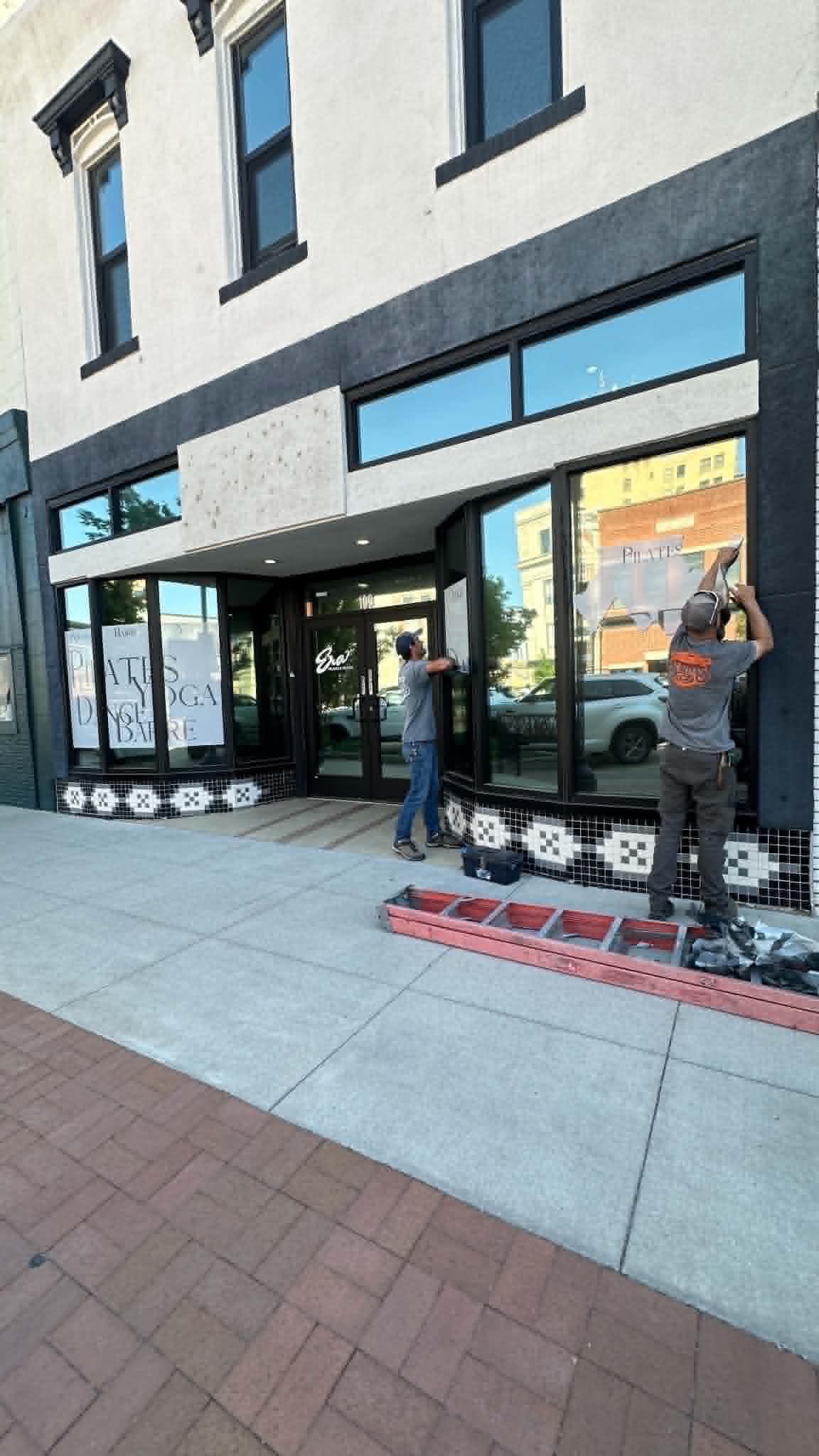
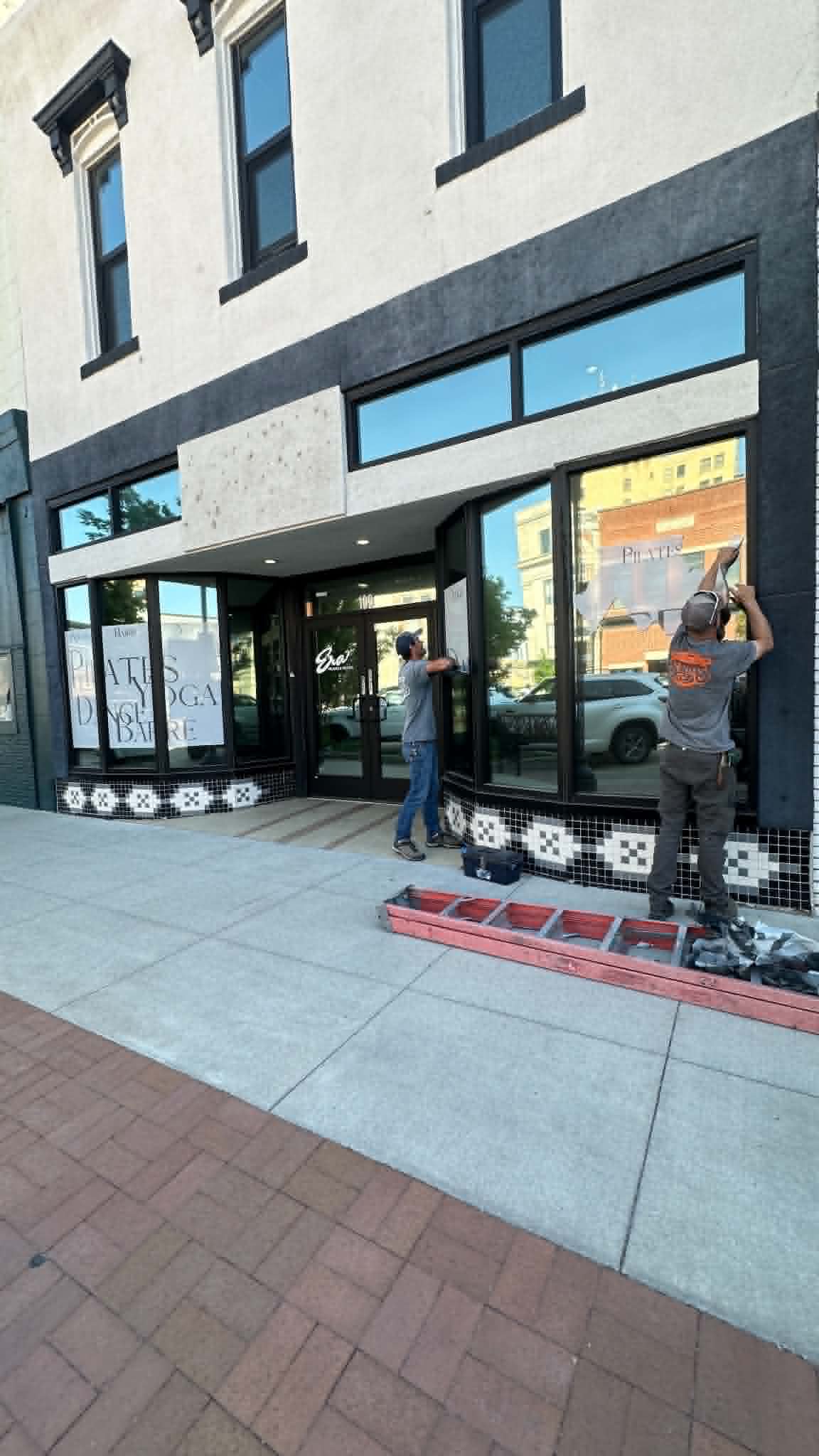
The case involved Era Pilates & Fitness, located at 109 S. Santa Fe Avenue. According to City of Salina records, Application #CC25-23 was filed by Gleason & Son Signs on behalf of Era Pilates. The original request sought approval for one non-illuminated wall sign above the business entrance and six vinyl window sign panels along the front storefront.
Business Located in Downtown Review District
Because Era Pilates is located within Business Improvement District No. 1, exterior signage is subject to review by the BID No. 1 Design Review Board before a sign permit can be issued.
That means the business was not only dealing with general sign regulations, but also with downtown design review requirements. The matter was handled through the Design Review Board process, not the Salina Planning Commission.
For downtown businesses, that review structure can add another layer to what may otherwise appear to be a simple storefront improvement.
Window Signs Prompted City Review
City records state that Era Pilates began operating in the former Bath Pub space in 2025. In early October, staff noticed six vinyl window signs installed along the street-level bay windows.
On Oct. 9, 2025, Planning staff sent owner Kristal Venters a letter stating that a sign permit and Certificate of Compatibility application were needed for the window signage and any additional signage.
The application was later submitted on Nov. 24, 2025.
Owner Says Business Intended to Comply
Kristal Venters, owner of Era Pilates & Fitness, spoke with Joshua Barnhart of Salina311 about the process and said the business intended to follow city requirements from the beginning.
“From the beginning, our intention was always to comply with the city’s rules and work through the proper process. The challenge was that the requirements surrounding this type of signage were not clearly communicated or consistently understood. The contractor we hired told us multiple times they had installed the same type of vinyl signage on several businesses on the same block without needing a permit, so it was confusing when we were suddenly told otherwise.
Once we understood the city’s interpretation, we removed the vinyl in good faith so we could continue moving forward with approval for permanent signage. What was especially frustrating is that we were told the same vinyl would have been acceptable if placed on the inside of the windows, even though that would not have achieved the same visibility or appearance for our business.
We respect the importance of downtown standards and simply wanted clear guidance so we could follow the rules correctly from the start.”
Original Proposal Raised Compliance Questions
The original proposal included one wall sign and six vinyl window sign panels.
City staff calculated the full signage package at approximately 83.6 square feet. City records state that the property was allowed up to 75 square feet of total sign area based on its frontage, but only 50 square feet could be displayed on the South Santa Fe Avenue facade.
That created a compliance issue before the Design Review Board could move forward with final approval.
The case also raised a technical question about how the city should classify and measure the window vinyl. Staff records show discussion over whether the six window panels should be treated as separate individual signs or grouped together for sign-area purposes.
First Review Was Postponed
The Design Review Board first reviewed the request on Jan. 8, 2026.
Rather than approving or denying the request, the board voted 4-0 to postpone the item so the applicant could submit revised plans.
The postponement reflected the central issue in the case: the business needed signage, but the original proposal did not clearly fit within the city’s sign limits.
Second Review Also Delayed
The item returned to the Design Review Board on Feb. 12, 2026.
At that meeting, staff reported that the proposal remained in “obvious noncompliance” because revised drawings had not been submitted. Staff also stated that it had maintained correspondence with the applicant and property owner to provide technical guidance, including a sign allowance summary.
City staff also acknowledged a procedural issue, stating that allowing the application to proceed to hearing without needed modifications was a “procedural oversight.”
Staff said the issue resulted from the city’s standard practice of seeking voluntary compliance through early coordination while waiting for accurate dimensions and revisions.
The matter was postponed again.
Revised Proposal Narrowed the Request
By the March 12, 2026 meeting, the proposal had changed substantially.
Staff records show the modified request included only the installation of one new non-illuminated wall sign measuring about 42 inches by 80 inches, or 23.3 square feet.
The proposed sign would be placed above the entrance to Era Pilates and constructed out of aluminum.
Staff found the revised wall sign appeared proportional to the building, would not dominate the South Santa Fe Avenue facade and would help pedestrians identify the business entrance.
Staff also found the revised wall sign complied with the C-4 Central Business District sign regulations.
Approval Came With Conditions
Staff recommended approval of the revised wall sign with conditions.
Those conditions included that the existing window vinyl be removed when the wall sign was installed. Staff also recommended that any significant future design or material changes be submitted for staff review to determine whether additional Design Review Board action would be required.
Public records reviewed by Salina311 do not show that the Design Review Board denied the final revised wall sign proposal. The records show the original proposal was postponed twice, then narrowed to a wall sign that staff recommended for approval with conditions.
Process Stretched From October to March
The timeline shows the process stretched across roughly five months.
Era Pilates was first contacted by city staff in early October after the window vinyl was observed.
The application was submitted in late November.
The first Design Review Board hearing was held in January.
The item returned in February but was postponed again.
A revised proposal came back in March.
For small businesses, that timeline can be significant. Storefront signs are often tied directly to visibility, customer traffic and brand recognition. When the approval process takes several months, it can affect how quickly a business is able to fully establish its presence downtown.
Broader Question for Downtown Businesses
The Era Pilates case highlights a broader issue for Salina’s downtown business district: whether the city’s sign rules are clear enough for business owners before signs are designed, purchased or installed.
The case also raises a practical question about how Salina should handle window graphics that serve multiple purposes, including advertising, privacy, aesthetics and customer comfort.
Downtown design standards are intended to preserve the appearance and character of the district. At the same time, businesses rely on signs to identify their location and attract customers.
The Era Pilates review shows how those two priorities can collide when rules are technical, interpretation matters and final approval requires multiple steps.