
Federal Disaster Aid Can Reimburse Local Infrastructure Costs, But Not Home or Business Losses
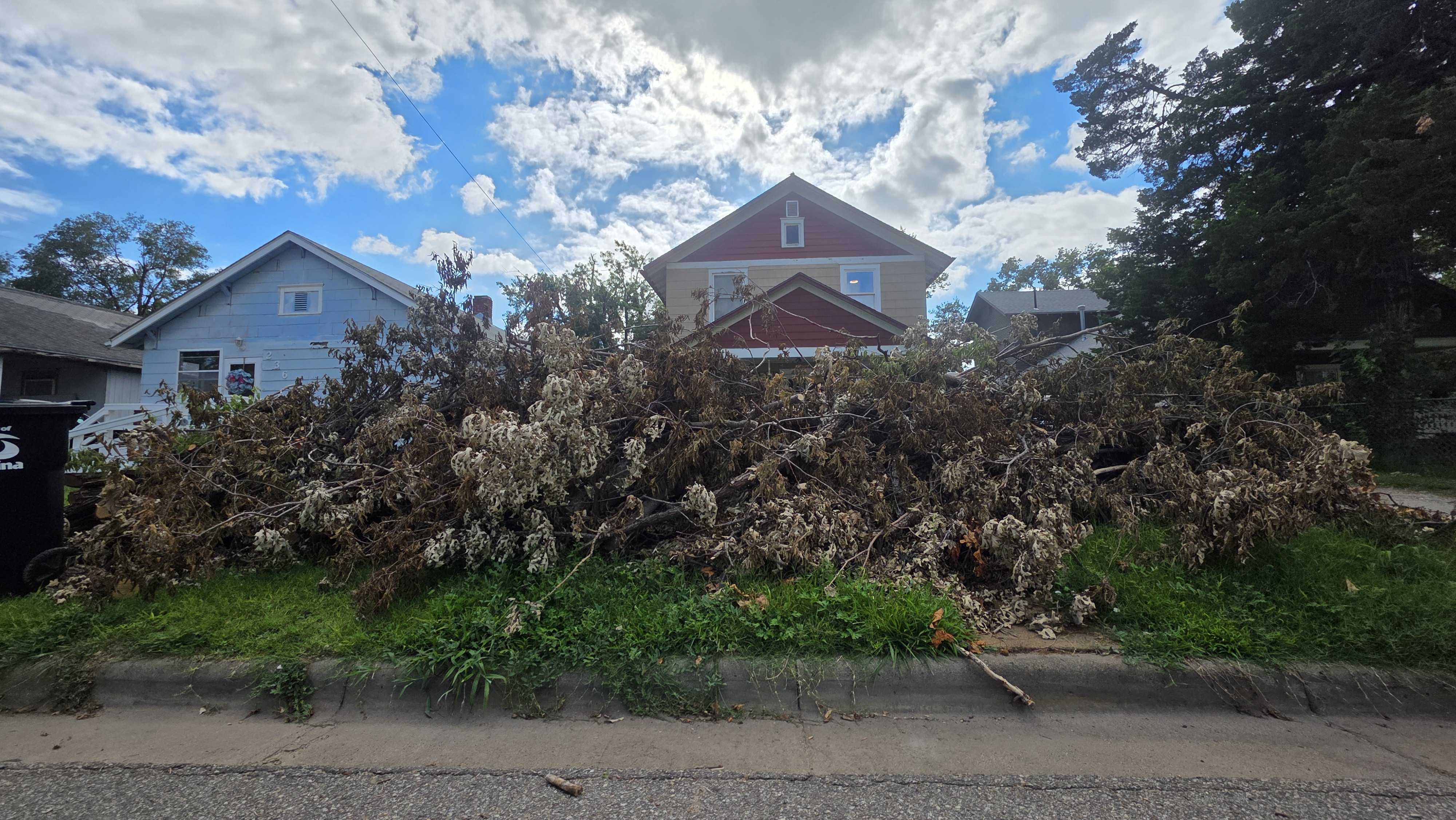
Saline County is included in a federal disaster declaration tied to severe storms, straight-line winds, tornadoes and flooding that occurred April 26–27.
The declaration has created some confusion about what federal disaster relief actually means. In this case, the assistance is not a direct relief program for homeowners, renters or private businesses. Instead, it is designed mainly to help local governments, state agencies and certain private nonprofit organizations recover eligible costs tied to damaged public infrastructure.
The declaration includes Cherokee, Morris, Osage, Saline and Wabaunsee counties. According to the Kansas Adjutant General’s Department, the declaration allows state and local governments, along with certain private nonprofit organizations that provide vital and essential services, to apply for FEMA Public Assistance funds.
What It Can Do
The federal declaration can help reimburse eligible public costs from the April 26–27 storms.
That may include expenses related to debris removal, emergency protective measures, damaged roads and bridges, water-control facilities, public buildings and equipment, public utilities, parks, recreational facilities and other public facilities.
For Saline County, that means the program could help cover eligible costs for public infrastructure or government response work if those costs meet FEMA requirements. Examples could include damage to a county road, a public bridge, a municipal utility system, a public building or storm-related emergency response work.
The funding is generally reimbursement-based. Local governments and eligible organizations must document the damage, show that it was caused by the declared storm event, prove that the work is eligible, and submit the required information through the disaster recovery process.
The federal share is generally at least 75% of eligible costs. The remaining share is handled through non-federal sources, which may include state or local funds depending on the project and the final funding structure.
No specific dollar amount has been publicly posted for Saline County yet. The declaration makes Saline County eligible to apply for reimbursement, but the final amount depends on submitted projects, eligible damages and FEMA approval.
What It Cannot Do
This declaration does not automatically provide checks to residents.
It does not directly pay homeowners for roof damage, tree damage, flooded basements, damaged vehicles or other private property losses.
It also does not directly reimburse private businesses for lost revenue, damaged inventory, building repairs or other private business losses under this Public Assistance designation.
That distinction matters. FEMA Public Assistance is different from FEMA Individual Assistance. Individual Assistance is the program that can provide certain aid to households after a federally declared disaster, but Saline County’s current approval is focused on public infrastructure and eligible government or nonprofit recovery costs.
Private property owners and business owners still generally have to rely on insurance, private resources or any separate aid program that may become available. This declaration, by itself, is not a homeowner or business relief fund.
Example of How It Works
Here is a simple example.
If a Saline County road or bridge was damaged during the April 26–27 storm event, the county could document the damage, the repair work, the cost of labor, materials, equipment and any contractor expenses. That information would then be reviewed to determine whether the work qualifies under FEMA’s Public Assistance rules.
If the total eligible cost of that project was $100,000, FEMA could cover at least 75%, or $75,000. The remaining $25,000 would be the non-federal share, handled through state or local sources depending on how the final reimbursement is structured.
That same example would not apply to a privately owned home, a privately owned commercial building or a business that lost sales because of the storm. Those losses are not what this Public Assistance declaration is designed to cover.
The bottom line is simple: Saline County’s federal disaster declaration can help local governments and eligible public-service organizations recover storm-related infrastructure costs. It does not create a direct payout program for private homes or private businesses.