
Saline County Tables Event Venue Rules After City-County Code Debate
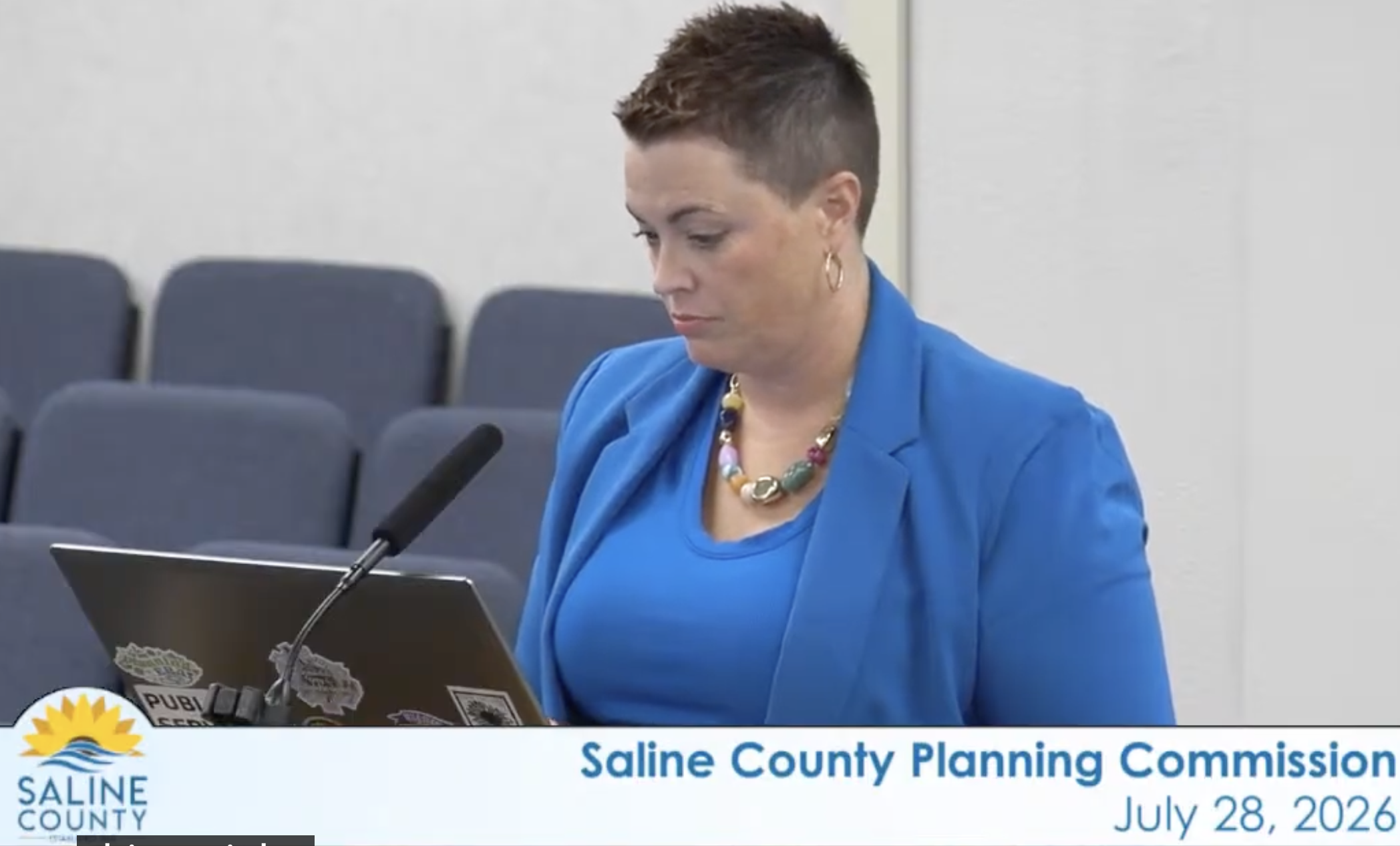
A proposed Saline County zoning update for rural event venues turned into a larger debate Tuesday over who should set the rules for county properties, how the City of Salina’s building-code role fits into county zoning, and whether new definitions meant to help rural venues could instead make them harder to operate.
After more than an hour of discussion, the Saline County Planning Commission tabled the proposal for further review. County staff and City of Salina officials are expected to continue working on the language before it returns to the commission.
The draft was presented as a way to create clearer categories for event venues and lodging uses that are not currently addressed in the county zoning code. Staff said the proposal would create three classifications — rural resort, managed rural estate, and banquet or event facility — all of which would require conditional-use permits.
The practical issue underneath those zoning definitions was building code. County staff said prior venue proposals had run into uncertainty after a project was approved by the county planning process and then moved into commercial permit review, where questions arose about sprinklers, commercial kitchens, occupancy, exits, and other life-safety requirements.
“Your zoning code, our building code”
Lauren Driscoll, director of community development services for the City of Salina, told commissioners the city and county overlap on the issue because the county controls its zoning code while the city is involved in building-code review.
“Really, where the city and the county overlap on this is your zoning code, our building code,” Driscoll said during the meeting.
Driscoll said the city and county have seen more rural event spaces used for weddings and other large gatherings, but building code does not always line up neatly with the kinds of properties found in the county. When enough people gather in a venue, she said, requirements such as sprinklers and exiting can automatically become part of the review.
She said the proposed county definitions were intended to create “buckets” that building and fire officials could connect to existing code requirements instead of forcing unique rural properties into categories that do not fit their actual use.
“Without structure, I’ve got nothing to match the building code up with,” Driscoll said, describing the difficulty of reviewing permit applications when the zoning code does not clearly define the use.
County staff also said Saline County has adopted commercial codes and has an agreement with the City of Salina for review. In that arrangement, city staff review commercial permits to city standards, but the properties at issue are outside the city and under county zoning jurisdiction.
Commissioners push back on city role
That city-county overlap prompted direct questions from commissioners. One commissioner asked why the city would have any jurisdiction over what happens in the county. Staff responded that the city is involved through commercial permit review because of the county’s adopted commercial codes and its agreement with the city.
The discussion exposed a tension running through the proposal: the city was seeking enough structure to apply building and fire codes consistently, while county commissioners were wary of writing zoning rules that felt too broad, too urban, or too restrictive for rural property owners.
Several commissioners questioned whether the proposal could pull ordinary private gatherings into a regulatory process meant for commercial event venues. One example raised during the meeting was a property owner who rents a home as an Airbnb during hunting season or hosts a private gathering such as a wedding, class reunion, or family event.
Commissioners discussed adding the word “commercial” to the classifications to make clear the rules were aimed at business operations, not private events. There was also discussion about removing references to hunting and recreation from the rural resort definition.
Driscoll said a private class reunion or similar gathering would not be treated the same as a business advertising tickets to the public. She said the question is whether a property is operating commercially and creating impacts such as traffic, parking, noise, lodging, or food service that affect neighboring properties and trigger code questions.
Safety rules versus rural flexibility
Driscoll told commissioners the proposal was not meant to shut down rural event spaces. Instead, she said, it was an attempt to make them possible by giving building and fire reviewers a framework that could allow flexible rural uses without automatically forcing them into more expensive commercial requirements.
For example, she said a managed rural estate category could allow a home-based rural hospitality use to be reviewed under residential-style occupancy concepts if operational thresholds and safety requirements are met. That could help a property operate as a home, short-term rental, and small event location without immediately triggering the same requirements as a larger commercial venue.
At the same time, commissioners worried the draft could still discourage rural events or create a “Big Brother” reaction from residents who moved to the county to avoid city-style regulation. One commissioner raised the concern that the county could unintentionally eliminate future music festivals or larger rural events if the ordinance was written too narrowly.
The commission walked through potential standards including maximum attendance, parking, emergency access, lighting, temporary structures, overnight accommodations, water and sanitation, kitchen and food service, smoke and carbon monoxide detectors, evacuation plans, occupancy signage, exit signage, and fire extinguishers.
Existing venues and short-term rentals
Commissioners also discussed whether existing event centers would be grandfathered. Staff said facilities operating before adoption of a new ordinance would generally be considered grandfathered unless they changed operations, but warned that grandfathering can be difficult to administer without a registry or clear documentation.
Short-term rentals were another sticking point. Driscoll said she was not asking the county to license short-term rentals and said that issue could become a separate category if policymakers chose to pursue it. She said the draft was aimed at properties with multiple uses that create a building-code problem, not ordinary residential rentals by themselves.
Late fire-code concern leads to delay
The debate shifted again when officials discussed a letter received from the state late Tuesday afternoon. Salina Fire Marshal Joe Kvacik said the state has jurisdiction over certain fire-code questions in the county and that categories such as rural estates or managed rural estates do not currently appear in state fire code.
That raised the possibility that the county’s proposed zoning categories might not solve the building and fire review problem as neatly as intended. The official said the city does plan review to city standards and then sends the review back, but the state may still have to review certain uses, especially when lodging, restaurants, food preparation, or commercial event activity is involved.
Driscoll told commissioners she had not been aware of the letter and asked for time to continue conversations with county staff.
“I understand the direction of this body in trying to create opportunity rather than make it difficult,” Driscoll said.
County staff then asked whether commissioners wanted to table the item so staff and city officials could review the issue further. The commission approved a motion to table the proposal for further review.