Pending Wichita Lawsuit Raises Questions About Salina’s $198,000 Flock Camera Program
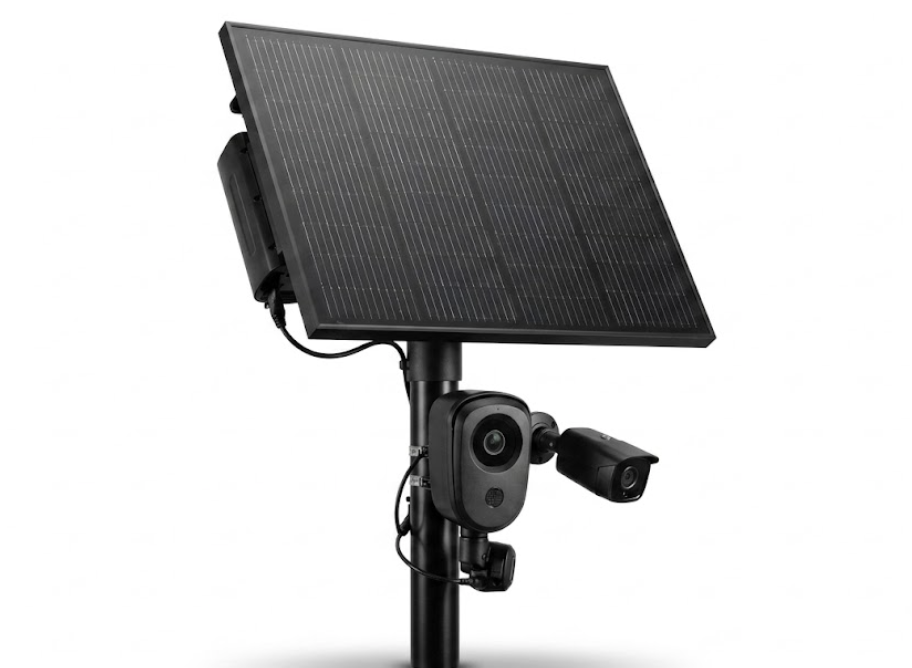
Salina commissioners approved a three-year renewal for 22 license-plate readers in June. A new constitutional challenge against Wichita does not accuse Salina of wrongdoing, but it places renewed attention on how the local system is searched, audited and shared.
A new lawsuit challenging Wichita’s use of automatic license-plate readers is raising questions about similar technology recently renewed by the Salina City Commission.
The lawsuit was filed July 30 in Sedgwick County District Court by Wichita resident Mason Grimmett, who is represented by the Kansas Justice Institute. It argues Wichita’s network of nearly 200 Flock Safety cameras allows police to conduct warrantless and suspicionless tracking in violation of the Kansas Constitution.
The claims remain allegations. No court has ruled that Wichita’s program is unconstitutional, and Salina is not a defendant in the case. Wichita has said it does not comment on pending litigation.
However, the lawsuit comes two months after Salina commissioners approved a new three-year agreement with the same company.
Salina Approved $198,000 Renewal
On June 1, the Salina City Commission voted 4-1 to renew the city’s agreement with Flock Group Inc., doing business as Flock Safety.
Mayor Michael Hoppock and Commissioners Trent Davis, Jerry Ivey II and Greg Lenkiewicz voted in favor. Commissioner Doug Rempp voted against the agreement.
The contract covers 22 fixed automatic license-plate readers for three years at a cost of $66,000 annually, or $198,000 overall. Funding comes from the Salina Police Department’s operating budget.
Salina originally entered into a three-year agreement with Flock in 2023. That agreement included 22 fixed cameras for $169,950 and two portable units for another $18,000.
The original agreement expired in April 2026. Police recommended renewing the fixed cameras but dropping the two portable units, which would have cost $21,000 for another three years. The department said eliminating the portable cameras helped offset the increase in the fixed-camera subscription price.
The city described Flock as a sole-source provider because its system integrates with Salina police equipment from Axon, including Evidence.com and the department’s Fleet 3 vehicle-camera system. City staff said no new installation costs were anticipated.
What the Cameras Collect
Flock cameras do not provide continuous traditional video surveillance. They photograph passing vehicles and record information such as the license plate, vehicle type, color, make, location and time.
The system can also identify characteristics such as missing or covered plates, bumper stickers, decals and roof racks. Officers can search for vehicles based on those characteristics even when a full license-plate number is unavailable.
The Salina contract package includes access to several broader Flock functions:
Searches of participating cameras across Kansas.Nationwide license-plate lookups through participating agencies.The ability to request access to cameras operated outside Salina’s jurisdiction.The ability to request feeds from privately owned cameras at businesses, schools and neighborhoods.Real-time alerts connected to databases maintained by the FBI and National Center for Missing and Exploited Children.Custom vehicle “hot lists.”Reports showing user activity, plate searches, alerts and system audits.
Those contract capabilities do not establish that Salina officers are currently using every feature or have access to every participating camera. They do show the potential reach of the system and make the city’s access and sharing settings important public-policy questions.
At the time of the renewal, the Police Department reported access to more than 40,000 license-plate readers operated by more than 2,500 agencies nationwide.
Police Cite Arrests and Recovered Property
Salina police reported that the Flock system had assisted with 108 criminal investigations since its installation.
According to information presented during the June 1 commission meeting, the system contributed to:
75 arrests.Recovery of 18 stolen vehicles.Return of more than $371,000 in stolen property.
Police also said the department had received no local complaints alleging misuse of the system.
Those figures demonstrate investigative outcomes associated with the cameras, although the public presentation did not provide case-by-case documentation showing whether Flock information initiated each investigation, confirmed information already known to police or played another supporting role.
Salina’s Stated Safeguards
According to the staff report submitted to commissioners, Salina’s system includes several safeguards:
All searches are logged.Users must provide a documented law-enforcement purpose.Administrative audits are conducted monthly.License-plate information is retained for 30 days.
Police officials said individual users must be approved and trained, and searches are linked to specific user accounts. Chief C.J. Wise told commissioners that case numbers are used to connect searches to criminal investigations.
The materials released with the commission agenda did not include the department’s complete operating policy, monthly audit reports, list of authorized users or records showing whether any searches had been rejected, questioned or found to violate policy.
The city also has not publicly identified every outside agency that can directly access Salina camera data or whether particular federal agencies are blocked from using the system.
Contract Gives Flock Continuing Data Rights
The proposed agreement states that, as between Salina and Flock, the city retains ownership of its customer data.
However, it also grants Flock a limited, nonexclusive, royalty-free, irrevocable, perpetual and worldwide license to use or disclose customer data to provide its services and to support or improve Flock products and services.
That language does not necessarily mean Flock may publicly release identifiable Salina license-plate information. It does create a legitimate question about how the company interprets its authority to use local data for product development, system improvement or other internal purposes.
The agreement also states that disputes are governed by Georgia law and generally proceed through mediation and arbitration. The order form contains an automatic-renewal provision unless either party provides written notice before the end of the contract term.
The version placed in the City Commission’s public agenda packet contained blank signature lines. That does not prove the contract was never executed. It means the publicly posted packet appears to contain the pre-approval version rather than the final signed agreement.
Public Opposition During June Meeting
The renewal generated significant public opposition during the June 1 meeting. Nearly 20 people addressed commissioners, with most speakers asking the city to reject or delay the contract. Concerns included privacy, potential misuse, nationwide data sharing and the ability to track lawful travel over time.
Rempp, the only commissioner to vote against the renewal, questioned whether the city had sufficient public trust and safeguards to justify continuing the program.
City Attorney Patrick Hoffman said additional best practices and a more detailed local policy could be considered through the Law Enforcement Citizen Review Board.
How the Wichita Lawsuit Could Relate to Salina
The Wichita lawsuit does not automatically determine whether Salina’s program is constitutional.
Wichita operates a substantially larger network, with nearly 200 cameras compared with Salina’s 22 fixed readers. Salina also publicly identifies a 30-day retention period, required law-enforcement purposes and monthly audits.
However, both cities use Flock technology capable of combining license-plate observations from multiple locations and making that information searchable by law enforcement.
The Wichita lawsuit argues that collecting individual observations may become constitutionally significant when those observations are combined into a detailed history of a person’s movements. The lawsuit asks the court to stop Wichita from operating the program without additional legal protections.
Kansas law defines captured license-plate information to include a plate number, photograph, GPS coordinates, date, time and information derived from those records. State law generally exempts captured license-plate data and camera locations from disclosure under the Kansas Open Records Act.
That exemption may prevent release of raw vehicle records and exact camera locations. It does not necessarily prevent the city from releasing policies, aggregate search totals, redacted audit reports, access agreements and records describing how the program is managed.