Salina Cultural Plan Nears Completion; Officials Address Public Debate Over Arts Funding
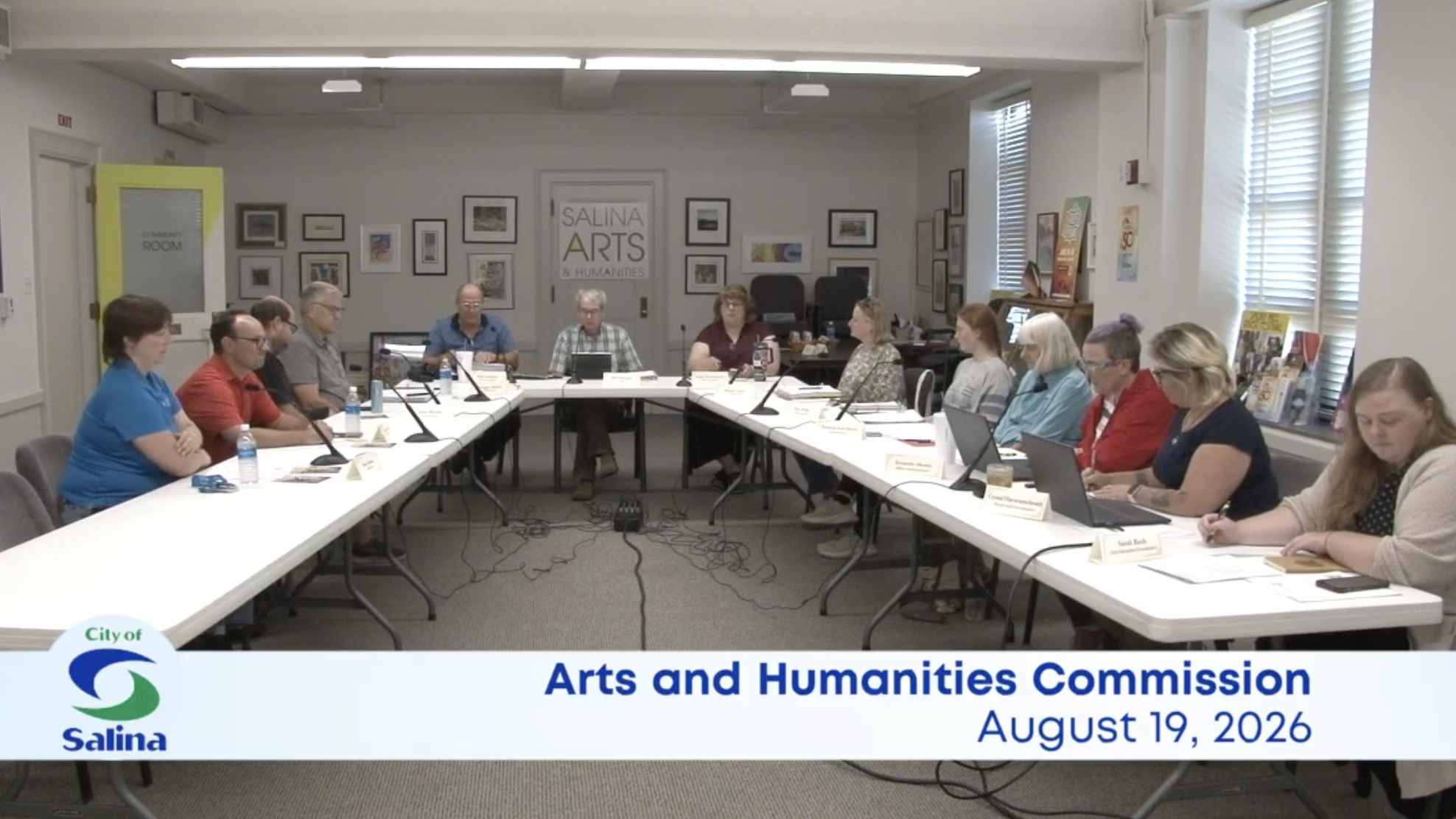
An outside consultant has completed the research and survey phases of Salina's cultural plan, with key findings scheduled to be presented to the Salina City Commission at a "state-of-the-arts" study session, staff told the Arts and Humanities Commission on Aug. 19, 2026.
Staff said the study session is likely to begin at 2:30 p.m. on Oct. 26 and include an hour-and-15-minute presentation. A public presentation via Zoom is planned for Jan. 5, with a one-week window for written questions closing Jan. 12. The final plan is expected to be presented to the Arts and Humanities Commission at its Jan. 20 meeting, with a recommendation for adoption, and then presented to the City Commission for adoption Jan. 25. A community celebration is being planned for that evening.
Staff said about 780 people responded to the survey, with roughly 75 more participating in small groups and a community gathering, bringing total participation to around 800. According to staff, about 60% of respondents were not directly engaged in arts activity, while about 40% identified as artists, musicians, or people working in an arts role. Staff said support for local and public funding of the arts among respondents was in the mid-80% range. Officials cited an arts vibrancy index that they said placed Salina in the top tier nationally among comparable small-to-medium Midwestern communities.
A commissioner raised concern that residents currently engaged in public debate over how taxpayer funds should be spent may not have participated in the survey, and asked whether their feedback could be incorporated. Arts & Humanities Director Brad Anderson said the survey had been open for about two and a half months and advertised on media outlets both supportive of and opposed to the agency's work, and that officials would follow the recommendations of those who participated. He said no additional surveying would be conducted.
Anderson acknowledged what they described as a toxic environment surrounding arts funding and said preliminary results indicated financial accessibility to arts programs is limited for some residents. Officials said they intended to focus on raising awareness about how decisions are made and how programs are funded, and pointed to the economic impact of the arts, including workforce attraction and retention, as part of that effort.