‘You Get What You Pay For’: Davis Defends Salina Tax Increase, River Investment
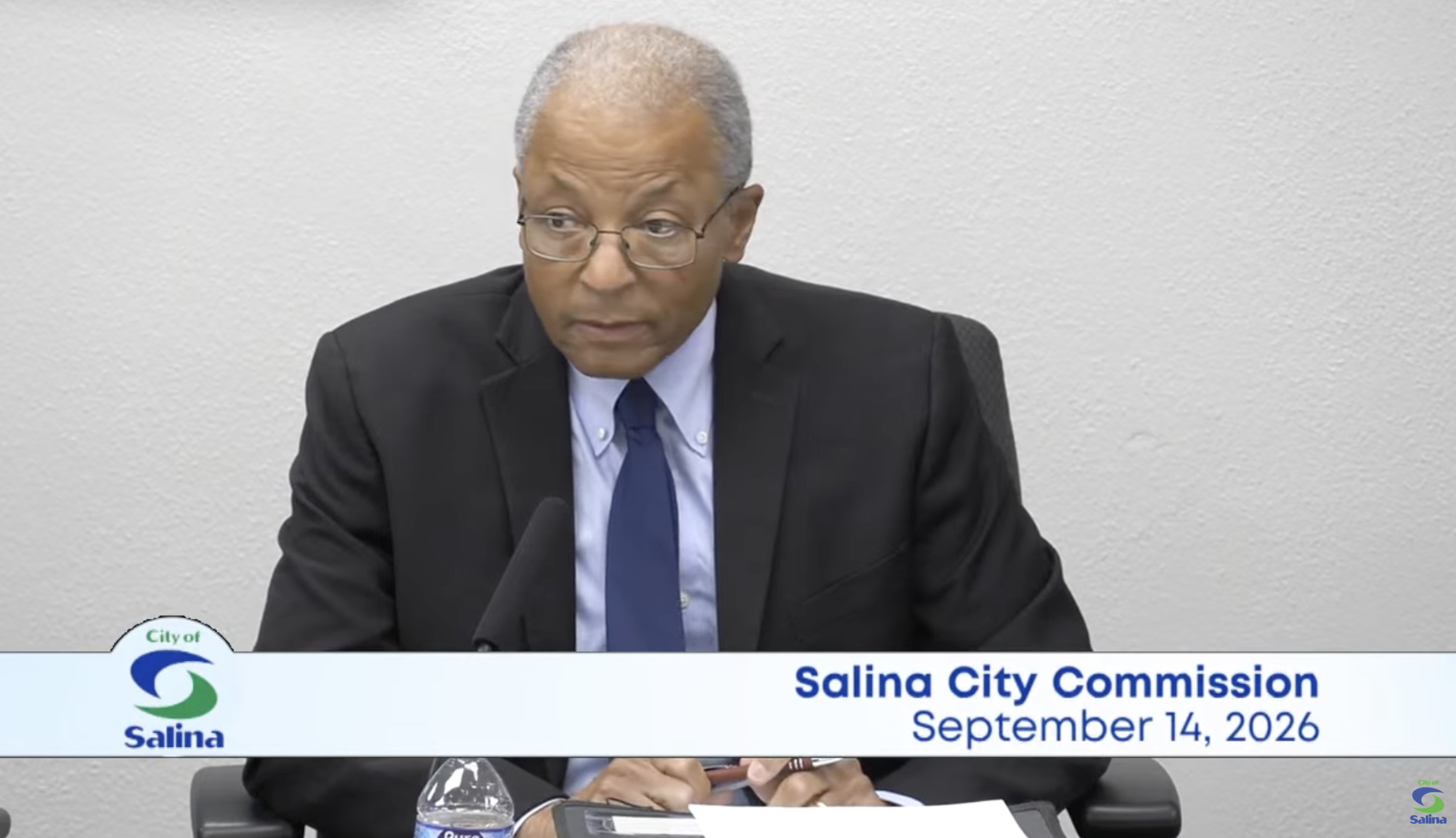
Salina City Commissioner Trent Davis defended the city's proposed property tax levy above the revenue-neutral rate Monday, arguing that Salina faces rising expenses, needs reserves for unexpected costs and must continue making long-term investments intended to support growth.
The comments came during discussion of the city's 2027 budget and consideration of levying a property tax rate above the revenue-neutral rate.
Taxes and Rising City Costs
Davis pushed back on the characterization that the city has continually increased taxes.
“There's a reference to us continuing to raise taxes. We've only raised them once in five years,” Davis said.
He pointed to recent storm damage as an example of expenses the city cannot always anticipate.
“When that windstorm came through, the city's expenses just left,” Davis said. “You think our insurance premiums aren't going up next year? You think that we're not going to have to take money from somewhere to pay the deductible on all the damage that the wind caused?”
Davis compared the city's finances to those of a household or business, with tax revenue providing the money necessary to operate.
“This is a house or a business as well, and its income is tax money,” Davis said. “Everyone involved is a taxpayer. We pay taxes as well.”
Davis acknowledged residents generally do not want to pay additional taxes but argued that services have to be funded.
“We don't like it, but you get what you pay for, or you don't get what you don't pay for,” Davis said.
Defending Long-Term Investment and the River Project
Davis said Salina provides services and amenities that other communities do not and argued that projects initially criticized by residents can later become valued investments.
He specifically defended the Smoky Hill River Renewal Project.
“You either believe that the River Project is going to be good for our future, or you don't,” Davis said. “I happen to believe that it's going to be the basis of a lot more development, private and public.”
Davis said communities ultimately have to decide whether they are willing to make investments intended to encourage future growth.
“There are a lot of Kansas cities that have not put growth and securing their future as a priority, and you can see what's happening to them,” Davis said. “They're getting smaller. They're withering.”
Davis acknowledged Salina's population has also declined somewhat but argued that maintaining population in rural America can itself represent relative success.
Why Davis Says the City Needs Reserves
Davis also defended maintaining money in reserve rather than using available funds to address every immediate financial need.
He compared the city's reserves to a household savings account but said municipal emergencies can involve substantially larger amounts.
“Every year something comes up that we don't expect,” Davis said. “That's the reason you have a rainy day fund for those things that are unexpected, and our unexpected expenses are huge when they show up.”
Davis said maintaining an adequate financial cushion also affects the city's ability to obtain financing for long-term projects.
His comments came during the same budget discussion in which Commissioner Doug Rempp questioned whether $5 million previously set aside for the River Renewal Project could instead be moved back to the city's general fund.
City Manager Jacob Wood confirmed that the $5 million has not been spent and could be moved back to the general fund through a future decision by the commission.
Davis Addresses the Burden on Residents
Davis also addressed concerns about residents struggling with property taxes, including elderly residents and those living on fixed incomes.
“We can't solve every family's personal issues,” Davis said. “Government can't solve every problem in every house.”
Davis said commissioners have to consider the city's finances and development beyond their own terms in office.
“We're trying to make this city the best we can and look forward to the future,” Davis said. “You have to look beyond the length of your own term. You have to look beyond two or three years.”
“The steps we take now are for the benefit of people five, 10 years down the road,” Davis said.
Want this story in print?
We'll print this story on the cover and inside of a keepsake 4-page paper, then package it and ship it right to your door.
Sign in to save 10% — paid members save 20%.