Salina schools report fewer students at lowest level on state ELA, math and science tests
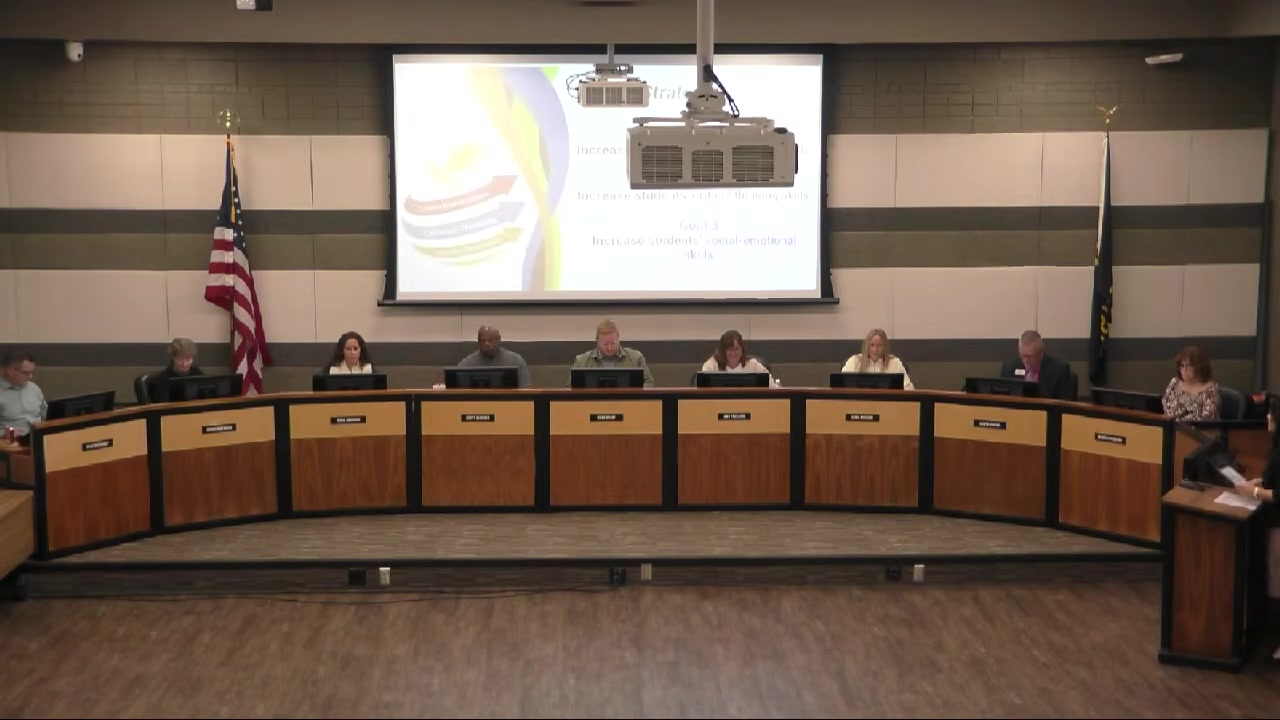
Fewer Salina Public Schools students are scoring at the lowest level on state English language arts, math and science assessments, Deputy Superintendent Shanna Rector told the USD 305 Board of Education on Tuesday in an update on the district's strategic plan.
The plan's three goals are to increase students' communication, critical thinking and social-emotional skills, measured by state assessments in English language arts, math and science along with behavior and attendance data.
In English language arts, 29.4% of students now score at Level 1, a 1.2% decrease from 2025 to 2026 and an overall decrease of 8.7%. The share scoring at Level 3 or 4 is 43.0%, up 2.8% from last year and 15.2% overall. The district's goals by 2027 are a 13% decrease in Level 1 and a 10% increase in Level 3 or 4.
In math, 27.3% of students score at Level 1, a 3.2% decrease from last year and 9.7% overall, and 38.0% score at Level 3 or 4, up 3.3% from last year and 13.3% overall. Rector said the district has met its English language arts and math goals ahead of the 2027 target.
In science, which is tested in fifth, eighth and 11th grades, 31.2% of students score at Level 1, a 3.8% decrease from last year and 9.9% overall. The share at Level 3 or 4 is 35.4%, unchanged from last year and up 6.2% overall.
The number of social-emotional behavior offenses rose 0.2% from last year and is down 1.1% from the 2021-2022 baseline, against a goal of a 15% decrease by 2027. Rector said offenses had risen in one year and have since been reduced by about 18% over the past three years.
Chronic absenteeism, defined as missing 10% or more of the school year, stands at 22.6%, up 0.5% from last year and down 10.2% from the 2021-2022 baseline. Rector said the district has been partnering with the City of Salina on ways to address absenteeism.
Rector also shared preliminary graduation data. The district's 2022-2025 federal graduation cohort rate is 89.5%, an increase of 5.9%, and its state cohort rate is 91.3%. The state calculation, new in 2025, accounts for students who transfer in already behind on credits. Official results are expected in January 2027.
One board member questioned using math and science scores as the measure of critical thinking. Rector said critical thinking is taught across all subjects, including social studies, career and technical education and art, but the state assessments provide the district's concrete measure of progress.