City estimates more than 2,500 pages, $1,021 review cost for 10 days of Andrea Murphy emails in shelter records request
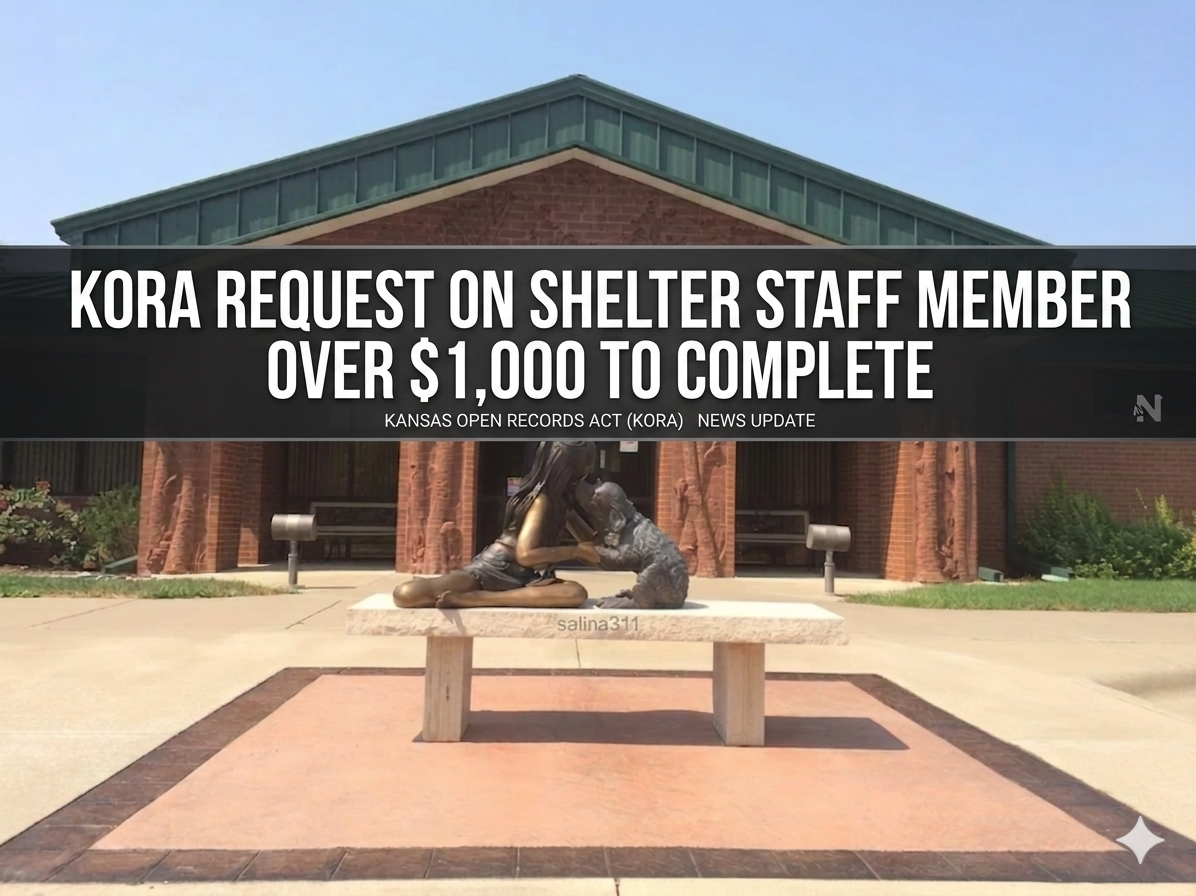
A new Kansas Open Records Act request tied to the Salina Animal Shelter case is giving a clearer picture of just how large the city’s internal email record may be.
According to an email shared with Salina311, City Clerk Nikki Goding told requester Susan Nickel on Tuesday afternoon that city staff had pulled emails for the requested dates and found the total came to about 2,500 pages. Goding wrote that reviewing the records and making any needed redactions was estimated at 12 hours of staff time, all assigned to the City Attorney at an hourly rate of $85.09, for a total estimated cost of $1,021.08.
The request, as described in the forwarded correspondence, sought Andrea Murphy’s emails from March 1 through March 10. In the email to Nickel, Goding said the city had completed the initial pull and asked whether the requester wanted to proceed as written or narrow the scope.
Nickel has since approved the estimated charge, and the KORA request is now moving forward through the city’s review and redaction process.
The estimate lands as public scrutiny over the shelter remains high following criminal charges filed earlier this month against Operations Superintendent Andrea Murphy and Animal Services Manager Monique Hawley. Both women are facing three counts of cruelty to animals tied to the reported euthanasia of three puppies at the Salina Animal Shelter in December 2025.
The volume described in the records estimate also adds another data point to the broader public-records fight surrounding the shelter controversy. Over the past several months, the case has expanded beyond the December euthanasia incident into questions about euthanasia procedures, veterinary direction, internal communication, inspections, training records, and what city officials knew and when.
Under the Kansas Open Records Act, public agencies may charge fees for furnishing copies of records, including staff time required to make the records available, and those actual costs may include review and redaction work. In this case, the city’s estimate suggests that even a 10-day slice of email records connected to one employee could require significant review before release.
The city did not, in the email shared with Salina311, provide a breakdown of how many individual emails made up the roughly 2,500 pages or how many of those pages might ultimately be withheld or redacted.
The estimate may also sharpen questions already being asked by members of the public about transparency in the shelter case. As requests continue to target emails, veterinary communication, and internal decision-making, the records process itself is becoming part of the story.
If released, the records could provide a more detailed look at internal communications during a key period in the fallout surrounding the shelter and the city’s response.