
Part Two: TPEC Contract Allows Incentives Even as Operating Targets Are Missed
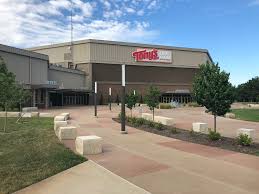
Tony’s Pizza Events Center’s management agreement does not require the City-owned venue to operate at a profit.
That distinction is central to understanding the contract between the City of Salina and Global Spectrum, L.P., now operating under the OVG360 name.
The agreement, extended in 2020, runs through Feb. 28, 2030. It includes a fixed management fee, potential incentive payments, annual operating budgets, City operating support, and target operating margin language.
The records reviewed so far show that the contract was built around managing the venue within an expected operating loss, not eliminating the loss entirely.
That means continued losses alone do not automatically establish a violation of the agreement.
However, agreement tracking numbers reviewed by Salina311 show Tony’s Pizza Events Center has performed worse than its proposed target operating margin in each completed operating year listed.
| Operating Year | Proposed Target | Actual | Difference |
| 2020-2021 | -$575,000 | -$684,525 | -$109,525 |
| 2021-2022 | -$550,000 | -$597,250 | -$47,250 |
| 2022-2023 | -$550,000 | -$597,250 | -$47,250 |
| 2023-2024 | -$525,000 | -$702,330 | -$177,330 |
| 2024-2025 | -$525,000 | -$698,414 | -$173,414 |
The figures do not, by themselves, show that OVG360 violated the contract. They do show that the venue’s operating results have remained worse than the targets listed in the agreement tracking document.
That creates an oversight question for the City: if the venue continues to miss operating-margin targets, what review process is being used to evaluate the manager’s performance?
How the Contract Works
The management agreement gives Global Spectrum/OVG360 responsibility for managing, operating, promoting, booking, and maintaining Tony’s Pizza Events Center.
The manager is expected to handle day-to-day operations, event booking, advertising, public relations, food and beverage operations, custodial and support services, and related facility functions.
The agreement also says the manager is to use reasonable efforts to maximize revenue, maximize events and attendance, manage expenses, improve the patron experience, and increase the facility’s economic impact.
At the same time, the contract does not make the manager financially responsible for every operating loss. The City remains the owner of the facility and provides operating funds to support the venue.
The agreement includes a fixed monthly management fee. It also allows annual increases tied to the Consumer Price Index or 3 percent, whichever is less.
The contract also allows incentive compensation if the manager meets certain benchmarks.
That incentive structure is important because it does not appear to be based only on whether the total operating loss is reduced.
Incentives Continued During Years Targets Were Missed
Agreement tracking numbers reviewed by Salina311 list incentive amounts during years when the venue’s operating results were worse than the proposed target operating margin.
| Operating Year | Listed Total Incentive |
| 2020-2021 | $31,402 |
| 2021-2022 | $66,956 |
| 2022-2023 | $71,039 |
| 2023-2024 | $94,112 |
| 2024-2025 | $75,983 |
The records reviewed so far do not show that those incentive payments were improper.
They do show that the agreement can allow incentive compensation even when the venue’s overall operating margin comes in worse than target.
That is because the incentive formula is tied to separate performance categories, including areas such as food and beverage revenue, event revenue, convention or conference attendee nights, and qualitative performance measures.
In practical terms, OVG360 can meet certain incentive benchmarks while the venue still requires City support and still misses its overall operating-margin target.
That is not necessarily a contradiction under the contract. It is part of how the contract is structured.
Missed Targets Are Not Automatically a Breach
The management agreement includes performance expectations and operating targets, but a missed target does not automatically equal a breach of contract.
The agreement contains provisions addressing operating budgets, target operating margins, annual audits, and potential termination rights. Those provisions include timing requirements and conditions that would need to be reviewed before determining whether the City had a contractual remedy available.
The contract also recognizes that some conditions may be outside the manager’s reasonable control.
For that reason, Salina311 is not reporting that OVG360 breached the agreement.
The records reviewed so far support a more specific conclusion: the contract allows continued City support and incentive compensation while the venue continues to operate at a loss and perform worse than listed operating-margin targets.
What Remains Unclear
The records reviewed so far do not fully answer several key questions.
They do not show whether the City formally reviewed each year’s operating-margin performance against the agreement’s target. They do not show whether City officials considered any contract remedies or performance concerns. They do not show how each incentive amount was calculated or which benchmarks were met.
Salina311 is seeking or reviewing additional records, including annual operating budgets, monthly financial reports, incentive calculations, fixed management fee totals, target operating margin worksheets, and any City correspondence or memos evaluating OVG360’s performance.
Those records are needed to determine whether the City actively monitored the agreement or simply continued funding the operating gap year after year.
The Public Question
Tony’s Pizza Events Center is not failing to generate revenue. As reported in Part One, the venue reached its highest operating revenue in five years during fiscal 2025.
The larger question is whether higher revenue is producing better results for taxpayers.
The contract anticipated losses. The tracking numbers show losses came in worse than target. The incentive records show payments continued under the agreement.
For residents, the issue is not simply whether the venue is busy. The issue is whether the City’s management agreement is structured to reduce the public cost of operating the facility, or whether it mainly rewards separate performance categories while the overall operating gap remains.
The records reviewed so far show a contract that can treat those two things separately.
Part Three will be published next week.