4 To 1 Vote: Salina City Commission Approves Flock Camera Renewal After Privacy, Safety and Data Debate
Salina City Commission Approves Flock Camera Renewal After Privacy, Safety and Data Debate
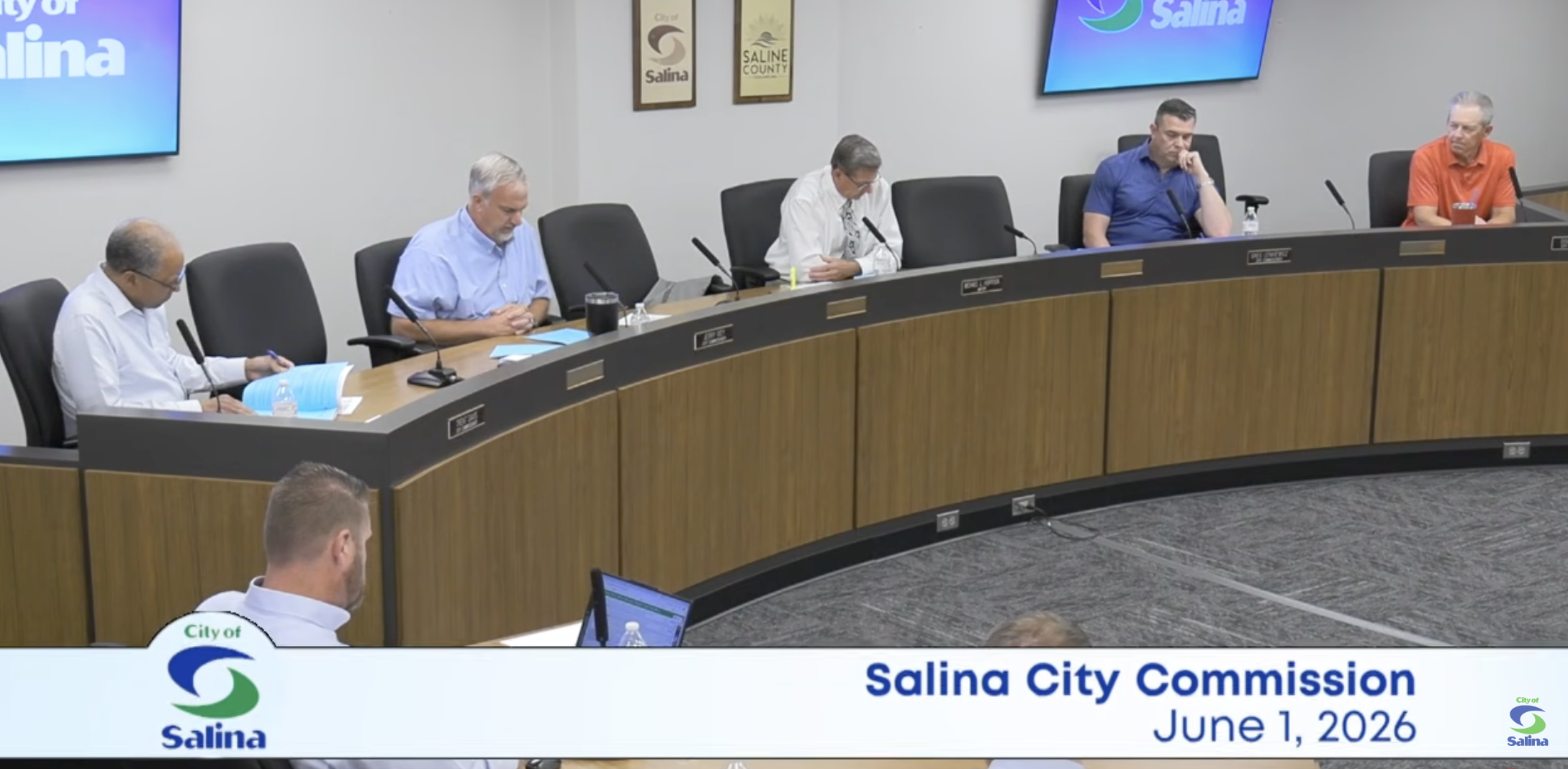
The Salina City Commission voted 4-1 to approve renewing the city’s use of the Flock Safety camera system following a lengthy public discussion over law enforcement benefits, privacy concerns, data access and the role of private surveillance technology.
Voting in favor were Mayor Michael L. Hoppock and Commissioners Trent W. Davis, Jerry Ivey and Greg Lenkiewicz.
Commissioner Doug Rempp voted against the renewal.
The vote followed public comment from residents who raised concerns about automated license plate reader technology and its ability to collect, store and search vehicle-location data. Police officials defended the system as a useful investigative tool that has helped solve crimes and recover stolen property.
Flock Safety is owned by Flock Group Inc., a private company based in Atlanta. The company is not owned by the City of Salina, a police department, Palantir or the federal government. Flock was co-founded by Garrett Langley, Matt Feury and Paige Todd, with Langley serving as CEO.
Reuters reported in March 2025 that Flock raised $275 million in a funding round led by Andreessen Horowitz, valuing the company at $7.5 billion. Reported investors include Andreessen Horowitz, Greenoaks Capital, Bedrock Capital, Meritech, Matrix Partners, Sands Capital, Founders Fund, Kleiner Perkins, Tiger Global and Y Combinator.
Because Flock is privately held, exact ownership percentages are not publicly disclosed.
The ownership and investment structure became part of the local discussion because Flock’s business is tied to technology that collects and organizes vehicle data. The system captures images of vehicles and license plates, then allows authorized users to search for license plates, vehicle descriptions, direction of travel and other identifying details.
The discussion centered on two competing questions: whether the system provides enough public-safety value to justify its renewal, and whether the public has enough assurance over how the data is controlled, accessed and audited.
During the meeting, Salina Police Department officials said the cameras have directly contributed to at least 108 criminal investigations, resulting in 75 arrests, the recovery of 18 stolen vehicles and the return of more than $371,000 in stolen property. Officials also said the system has provided evidence, generated leads, supported witness statements and assisted with ongoing investigations and prosecutions.
Police officials said the system can save time in investigations. In one example, they said if a suspect leaves a retail theft in a vehicle, officers may otherwise have to review hours of surveillance video to identify the vehicle. With Flock, officers can search by vehicle type, color, make and model, helping them identify a tag more quickly.
Officials said there have been no complaints filed against the Salina Police Department alleging abuse of the system.
Questions from commissioners focused on access, auditing and safeguards. Police officials said users must be approved by an administrator and trained before receiving login access. They said the department can track individual users through login information.
Officials said the video data deletes after 30 days, but the audit trail does not delete. That means if an allegation of misuse were made later, the department could review who accessed the system and what searches were conducted.
Police officials said managing the program takes about five to six hours per month, including auditing, training new officers and handling technical issues.
Public comment was largely critical of renewing the contract.
Several residents said their concern was not opposition to law enforcement, but concern over mass surveillance. Speakers argued that Flock cameras do not only capture suspected criminals, but also collect vehicle-location information from ordinary residents going to work, school, church, medical appointments, political meetings, protests or other daily activities.
Some speakers pointed to documented misuse of Flock or license plate reader systems in other Kansas communities. They said those cases show the risk of allowing authorized users to search vehicle data for improper personal reasons, even when policy requires a reason for the search.
One speaker said the issue should be “trust but verify,” arguing that the public should be able to review enough audit information to confirm the system is being used properly.
Another speaker questioned whether the city should renew with Flock without seeking bids from other vendors.
Several speakers raised concerns about the value of the data itself. They argued that the data generated by public streets may have significant value to a private technology company and its investors. Others said the involvement of major venture-capital firms should prompt deeper review of how public-safety technology companies grow, profit and expand.
However, the reported investment in Flock does not mean Salina’s specific camera data was sold to those investors. Investors bought into Flock as a private company. The local policy question is whether Salina residents are comfortable using a privately owned surveillance platform whose value is tied to collecting, organizing and analyzing public-safety data.
Supporters and neutral commenters said the cameras can be useful in serious cases, including homicides, robberies, kidnappings, Amber Alerts, stolen vehicles and other incidents where real-time vehicle information may help officers locate a suspect faster.
One speaker with law enforcement experience said Flock can be a useful tool, but also warned that it is powerful enough to map a person’s patterns if misused. The speaker said the system can show when and where a license plate was captured, allowing someone with access to track a vehicle’s movement over time if enough cameras are involved.
Salina Police Chief C.J. Wise acknowledged the privacy concerns and said the department must maintain safeguards to ensure the system is used ethically. Wise said officers are also citizens and understand concerns about privacy and technology.
Wise said the department reviews misuse cases from other communities and works to strengthen its own safeguards. He said the cameras are located in public areas where there is not the same expectation of privacy as inside a home. He compared the system to an officer legally observing license plates from a public location, but said the technology gives officers another set of eyes that can help solve cases more quickly.
Wise also said case numbers are used to tie searches to investigations. He said a case number means an officer is writing a report and has an investigation connected to the search.
Commissioners discussed the balance between safety and privacy before the vote.
One commissioner said privacy concerns are valid, but said modern technology has already made much personal information widely accessible through phones, stores, cameras and advertising systems. The commissioner said stronger policies may be needed to protect the public while still allowing police to use tools that help solve crimes.
Another commissioner said he had difficulty voting against a tool that could help officers do their jobs and keep residents safer.
The final vote approved the renewal, with Rempp casting the lone dissenting vote.
The decision leaves Salina continuing with Flock while broader questions remain over data control, audit access, retention, safeguards and public oversight.
For Salina, the debate is no longer only whether the cameras work. Police officials say they have contributed to arrests, investigations and stolen property recovery. Residents opposed to the system argue the larger issue is whether those benefits justify the privacy tradeoff and reliance on a private surveillance platform backed by major investors.
As Flock continues to grow nationally, data remains central to the public debate. The key questions for Salina are who controls the data, who can access it, how use is audited, how long information remains available and whether local safeguards are strong enough to prevent misuse before it happens.