
Rolling Hills Zoo Celebrates Birth of First Giant Anteater Pup
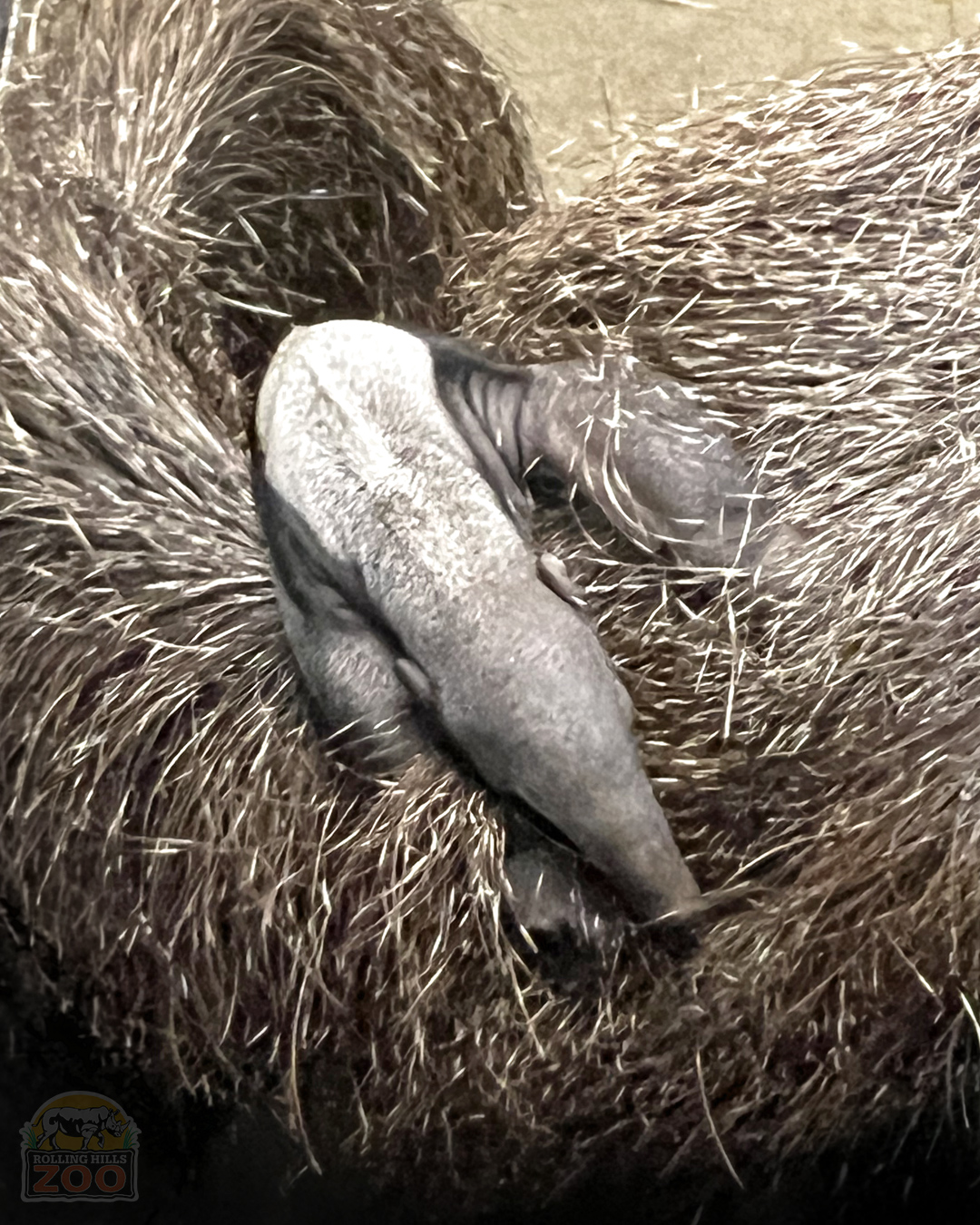
Rolling Hills Zoo has welcomed its first giant anteater pup, marking a historic milestone for the Salina attraction.
First-time mother Ruth gave birth to a healthy pup on May 19th—the zoo's first successful giant anteater birth. The little one, weighing just 1.5–2 pounds, is also the first offspring for father Pumpkin.
The newborn is already reaching important developmental milestones. Within 1.5 hours of birth, the pup climbed onto Ruth's back—a significant accomplishment for such a young anteater. Zoo staff confirmed successful nursing the following day, indicating that mother and baby are thriving.
Ruth has proven to be an attentive and protective parent, keeping her baby safely tucked beneath her tail. The next milestone will be the pup opening its eyes in the coming days, followed by growing stronger and becoming more curious about its surroundings.
"Ruth has been a very attentive mother," said Mark Echevarria. "Pumpkin is not involved in the rearing process, so for him it's business as usual."
About Giant Anteaters
Baby anteaters, called pups, spend much of their first year riding on their mother's back. Their fur pattern closely matches mom's, providing natural camouflage in the wild.
For the first six months, pups rely entirely on their mother's milk before gradually transitioning to a diet of ants and termites. As they mature, their claws grow stronger and longer, eventually allowing them to tear apart logs and insect mounds to forage independently. Giant anteaters reach breeding maturity at three to four years of age.
Conservation Importance
Native to Central and South America, giant anteaters are listed as Vulnerable on the IUCN Red List, with fewer than 5,000 estimated to remain in the wild. Habitat loss, wildfires, vehicle collisions, hunting, and illegal wildlife trade threaten their survival, making every birth an important step toward ensuring the species' future.
Zoo visitors may catch glimpses of Ruth and her pup in the coming weeks as the young anteater continues to grow and develop.