
Salina Fire Chief Warns City Growth Is Increasing Wildfire Risk
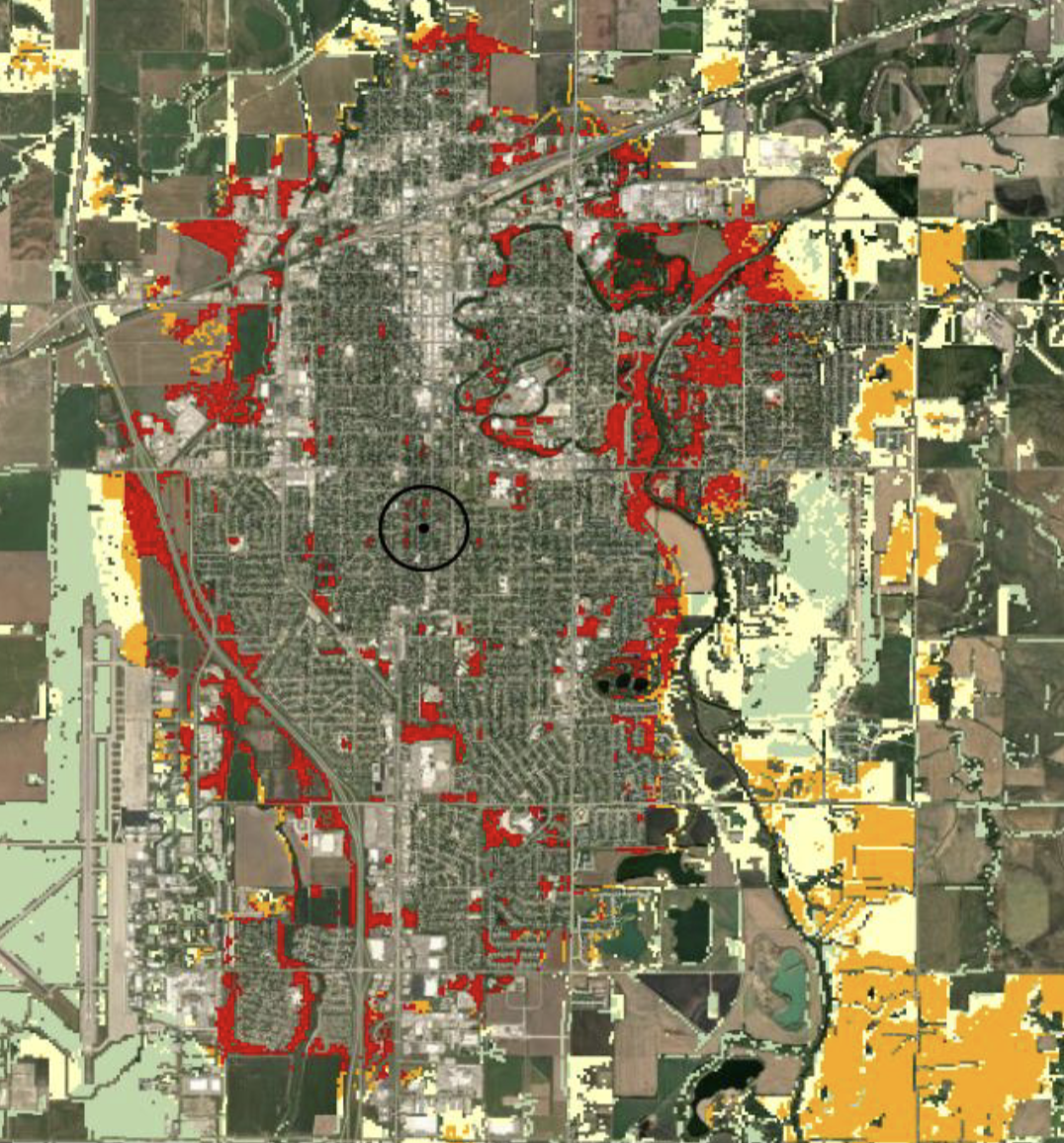
Salina Fire Chief Shane Pearson is warning city commissioners that continued development along Salina’s edges is increasing the risk that a fast-moving grass or crop fire could reach homes, utilities and other developed areas.
In a July information memo, Pearson outlined two related concerns facing the Salina Fire Department: the city’s growing wildland-urban interface and limitations affecting the department’s fire-prevention and community-risk-reduction efforts. The memo was informational and did not include a formal request for funding or commission action.
Development Moving Into Higher-Risk Areas
The wildland-urban interface, commonly called the WUI, is the area where homes and other development meet or intermingle with undeveloped land and vegetation capable of fueling a wildfire.
Pearson said Salina’s risk is particularly increasing in the eastern and southeastern portions of the city, where residential development and public infrastructure are expanding into land historically used for agriculture, pasture or other open space.
As that development continues, the separation between neighborhoods and grass, brush and agricultural vegetation becomes less defined.
That creates a greater possibility that a fire beginning outside the city limits could spread into developed portions of Salina, particularly during periods of drought, low humidity and strong winds.
The National Wildfire Coordinating Group defines the wildland-urban interface as the area where structures and other human development meet or intermingle with undeveloped land or vegetation fuels.
Pearson identified uncontrolled western red cedar growth and tall grass in and around roadway ditches as local concerns. Under dry and windy conditions, those fuels can allow a fire to spread rapidly toward neighborhoods, utilities and other critical infrastructure.
Current Fire Trucks Have Operational Limitations
According to the memo, the Salina Fire Department’s existing municipal fire apparatus are primarily designed for structure fires, emergency medical calls, rescue operations and hazardous-material responses on improved roads.
The vehicles are not intended for sustained off-road operations. Pearson also said the department’s current apparatus cannot pump water while moving, a capability commonly needed when fighting fast-moving grass fires.
Wind-driven fires can move faster than firefighters working on foot and may require mobile suppression, containment operations and coordination with neighboring rural fire departments.
Pearson did not identify a specific firetruck for purchase, provide an estimated cost or recommend an immediate budget amendment. Instead, he asked commissioners to consider a phased approach as the city’s risk profile changes.
Short-Term Recommendations
The department identified several measures that could be considered before purchasing additional equipment:
Identifying neighborhoods and subdivisions facing the greatest wildfire risk.
Conducting pre-incident planning with Saline County rural fire districts.
Educating property owners about defensible space and vegetation management.
Considering controlled burns in selected high-risk areas to reduce accumulated fuel.
Defensible space generally refers to reducing combustible vegetation and other materials around a structure so firefighters have a safer area to operate and flames are less likely to reach the building.
The Kansas Forest Service recommends vegetation management, fuel reduction and property improvements as ways communities and homeowners can reduce wildfire damage. The agency also operates a wildfire-risk assessment portal and provides training, equipment programs and technical assistance to Kansas fire departments.
Longer-Term Equipment and Training
Pearson said longer-term planning should include acquiring wildland or brush apparatus capable of operating away from improved roads.
The department also identified a potential need for water tankers or tenders capable of supporting off-road fire suppression and supplying water in areas without immediate access to hydrants.
Other recommendations include specialized training in grass-fire behavior, structure protection and coordinated mobile-fire attacks. Long-term capital planning could also address wildfire mitigation and improvements intended to make residential and commercial properties more resistant to fire.
The memo does not specify how many vehicles would be needed, when purchases should occur or what funding sources could be used. Those details would require future budget proposals or commission consideration. Humanity has apparently discovered that expanding a city into grassland creates grass-fire problems, but at least the department is raising the issue before the smoke arrives.
Map Shows Risk Inside and Around Salina
A wildfire-risk map included on Page 3 of the memo shows areas marked in red around Salina’s outer edges, along portions of the Smoky Hill River corridor and in scattered locations inside the city.
According to Pearson, red indicates areas considered at “extreme” risk. He said some high- and extreme-risk areas are residential neighborhoods near the city’s fringes, while others are located closer to the center of Salina because of natural vegetation and available fuel.
The map is intended as a planning tool. It does not mean that every property within a colored area faces the same immediate threat or that a wildfire is currently approaching the city.
Fire Prevention Division Faces Staffing Limits
The second portion of Pearson’s memo focuses on Community Risk Reduction, or CRR.
The Fire Department’s Prevention Division handles fire and life-safety inspections, construction-plan reviews, code enforcement, fire and explosion investigations, fireworks inspections and enforcement, and public-safety education.
The division also works with other city departments on hydrant placement, required water flow, street widths, development design, roundabouts and emergency-vehicle access. Pearson said those decisions can directly affect response times, firefighter access and public safety.
The division is staffed by:
One part-time inspector.
Two full-time inspectors who also conduct fire investigations.
One division chief who serves as fire marshal.
Those employees are responsible for routine and complaint-based inspections, enforcement follow-up, development reviews, construction coordination, investigations, fireworks enforcement and public education.
Broader Prevention Model Under Consideration
The Fire Department has been studying a transition from a traditional fire-prevention model to a broader Community Risk Reduction system.
Under that approach, the department would use local data to identify recurring hazards, direct education toward the greatest risks and align personnel and resources with changing conditions.
Pearson said the existing staffing level and operating budget are not sufficient to fully implement that expanded model while continuing to meet the division’s current inspection, enforcement and investigative responsibilities. The memo does not specify how many additional employees would be required or how much an expansion would cost.
Pearson concluded that wildfire risk is no longer only a rural concern for Salina. He said the department will continue evaluating prevention, equipment, training and community-risk-reduction options as development expands into previously open land.