Brad Anderson, Community Leaders Reflect on 60 Years of Salina Arts & Humanities
Salina Arts & Humanities is marking 60 years as a City of Salina department in 2026, a milestone that comes alongside decades of growth in the community’s arts, cultural and historical programs.
The Salina Cultural Arts Commission was established in 1966. Over the following decades, programs and responsibilities were added, including the Smoky Hill River Festival and the Smoky Hill Museum, which became a division of the department in 1986.
As Salina Arts & Humanities reaches the milestone, Salina311 asked Executive Director Brad Anderson and several community and business leaders to describe what the department has contributed to Salina and the role they believe arts and culture play in the community.
Brad Anderson: Salina Arts & Humanities
Anderson provided the following statement in its entirety:
“The City of Salina has had a long-standing history of appreciation for arts and culture. Town founder Alexander Campbell established Salina’s first history museum in his home. There were three municipal bands active at the end of the 19th century. An early business leader and banker gifted a botanical garden to the city which became Oakdale Park. A local librarian and arts society led an effort to acquire two Sandzen oil paintings in the 1920s and Salina can boast that Charles Shaver was recognized as the first licensed architect in Kansas. His design of the United Building, the Stiefel Theatre, and other iconic structures are still evident and appreciated today.
“Salina established a community theatre and symphony orchestra in the 1950’s and established the Salina Cultural Arts Commission in 1966, the same year the National Endowment for the Arts was founded, again demonstrating Salina’s desire to be at the forefront of cultural development.
“The Commission grew over the next few decades as programs and services were added. This includes the addition of the Smoky Hill Museum as a division of the department in 1986. Unlike most city departments, Salina Arts & Humanities (SAH) and the Smoky Hill Museum also have private funding groups that support programs, services, and capital expenditures in an effort to lower the taxpayer burden.
“While there are other communities with taxpayer funded cultural programs and services, Salina chose to make its arts and culture program an independent department, giving equal voice at the city administration table. This has made Salina the envy of many other communities across the state. The SAH staff are regularly invited to consult with other arts administration professionals around the state to share how we function as a city department.
“The enrichment provided to the community is worth noting. Key programs include Arts Infusion, an educational enrichment program for children in pre-K-12 education; a public art program that shares our arts and culture heritage across the community, including helping private businesses and groups as they add art to public spaces; administration of a privately funded Horizons Grant program for developing artists and organizations; the staff serves as a resource partner to the community as they look to engage with creative practices or programs; and of course, the staff spends about half of their time annually with the production of the Smoky Hill River Festival.
“The staff also assist as needed in the economic development and workforce recruitment efforts being made by SCEDO and the Chamber of Commerce. We supply publications and information about arts and culture offerings for adults and children as people are trying to decide if Salina is a good fit. We offer tours of the city’s cultural landscape to visiting groups and new businesses considering relocating to Salina. Quality of life is becoming an increasingly important factor for people entering the workforce. Salina has a great deal to offer in this area, so having a vocal advocate helps raise awareness about the unique status of the community. During a recent visit by cultural planners they commented, ‘Salina is punching well above its weight in the variety and quality of arts and culture programs it offers.’
“Cultural planning is another important aspect of the department’s work. Taking time to hear about community needs and helping coordinate constant improvement in programs, services, and accessibility is necessary for Salina to maintain its reputation as a cultural leader.
“‘I believe the work of Salina Arts and Humanities is as valuable and important as having good streets, beautiful parks, well-designed communities, and excellent public safety. The staff and I strive to offer the best service possible and help instill a sense of community pride by the citizens for all we have to offer.’
“Private funding and attendance at local arts and culture venues is strong evidence that many citizens and visitors appreciate what we have. Approximately 35-70% of attendees at cultural events and programs come from outside of Saline County. This generates additional revenue for the City and helps keep the local businesses busy. Annual State of the Arts reports are made each October to the City Commission highlighting this economic impact.
“Privately funded programs like SculptureTour Salina and Boom! Street Art and Mural Festival are further examples of the high value citizens and businesses place on having a strong cultural arts community.
“‘I am proud of the history of Salina Arts & Humanities, its staff, and the programs we offer to the citizens of Salina. There is a bright future ahead as we meet the challenges and opportunities that await.’”
Larry Britegam: A Changing View of the Arts
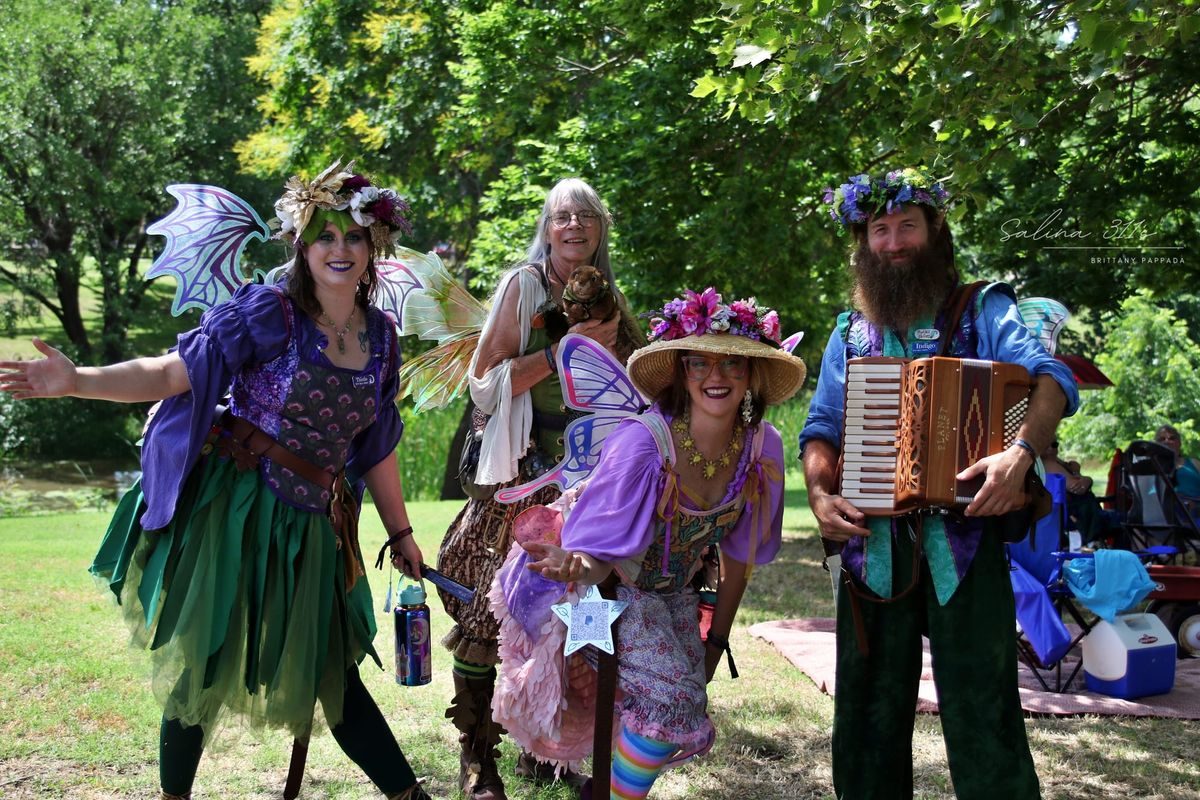
Larry Britegam wrote that his own view of the arts changed after becoming involved with the River Festival in its early years.
“I’ll be the first to admit that, early in my life and career, art was not something I thought much about or felt drawn to. It seemed difficult to understand and everyone seemed to have a different opinion about it.
“That began to change when I volunteered at the River Festival in 1978, the year our bank sponsored the First Class Five. It opened my eyes to a world I had largely ignored—the world of artists. They seemed different from me, but I came to realize I was just as different to them.”
Britegam said he watched Arts and Humanities grow while its leaders worked to build community and financial support.
“But something changed. Arts and Humanities was still a growing organization, and its leaders kept showing up at community events, sharing their vision, and explaining what they were building. They seemed to be everywhere.
“Starting an organization from scratch is never easy. I know those early stages were built one step, and one request, at a time.”
Britegam also addressed the scrutiny that public arts funding can receive.
“Over the years, arts funding has faced scrutiny many times, and that is understandable. Like any nonprofit organization, its impact on the community and individuals should be evaluated. Still, arts funding is often one of the easiest targets for financial cuts, whether at the national, state, or local level.
“Arts and Humanities has made a meaningful difference for our community and for those who visit it. We need to continue supporting it.”
He concluded with a lighter observation about how his views have changed.
“Yes, I am still a novice when it comes to understanding art, and I probably always will be. But I have learned that art is not just about the object itself; it is about the journey of learning.
“I am even starting to like the bent light poles on the North Ohio Street bridge!”
Leslie Bishop: Downtown as a Canvas
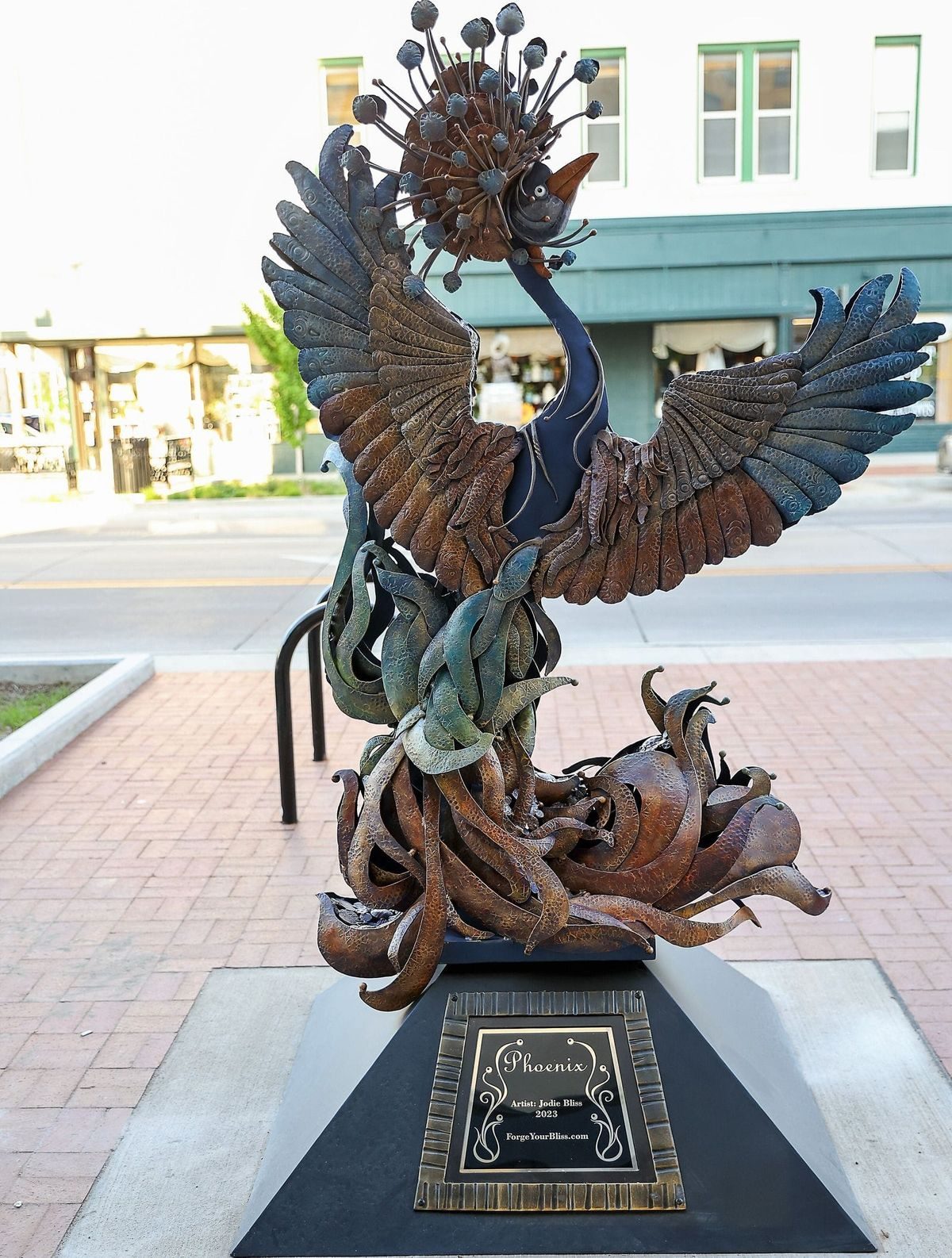
Salina Downtown Inc. Executive Director Leslie Bishop focused on the department's relationship with downtown Salina and the role public art plays in the downtown district.
“From Salina Downtown Inc.’s perspective, Salina Arts & Humanities is an important part of what makes Salina a vibrant and interesting community. We have a strong and positive relationship with Salina Arts & Humanities, and we truly appreciate the partnership we have with them.
“One of the things we value most is the way downtown Salina is often used as a canvas for public art. Having art throughout downtown adds another element to the downtown experience. It brings color, creativity, and vibrancy to our streets and gives people another reason to stop, look, explore, and enjoy their surroundings.”
Bishop said the accessibility of public art is part of its value.
“We also believe public art is something that everyone can enjoy. It doesn’t matter how old you are, your gender, race, background, or socioeconomic status. Art can speak to everyone in different ways. You may walk past a sculpture or an installation and simply enjoy how it looks, or it may make you stop and think. Either way, it creates an experience and a connection to the community.”
She also connected the arts to downtown's broader vitality.
“Public art adds one more reason to be here and helps make downtown a more attractive and welcoming destination for both residents and visitors.”
Guy Walker: Arts and Economic Development
Blue Beacon President Guy Walker pointed to the relationship between Salina's arts organizations and investment in downtown Salina.
“Salina has a long history of recognizing the importance of the arts, and Salina Arts & Humanities in particular, is a critical component of fostering an accessible and thriving arts environment across local government, the business community, and arts organizations.”
Walker said the arts played a role in the downtown revitalization effort.
“The recent revitalization project that continues today would not have made it out of the visioning phase without the contributions the arts organizations were already having on the downtown area. It is a credit to the arts that all stakeholders of the downtown project immediately recognized the important role the arts would play in the project’s success.”
He specifically cited several local organizations and programs.
“The project would have been difficult to underwrite without the impact of the arts organizations on culture, visitation, and vibrancy. This includes the Stiefel Theatre, Theatre Salina, Salina Art Center, Salina Symphony, Sculpture Tour Salina, Boom! Salina, and many other programs and events supported by Salina Arts and Humanities. The result is a direct, positive economic impact, helping support additional investment in small, locally owned businesses.”
Walker concluded:
“The strength of the arts in a community does not happen by accident. It requires facilitation, collaboration, and organization or support, all things Salina Arts & Humanities seeks to provide.”
Six decades after the Salina Cultural Arts Commission was established, Salina Arts & Humanities continues to operate as a City of Salina department while overseeing, supporting and partnering on arts, cultural, educational and historical programs across the community.