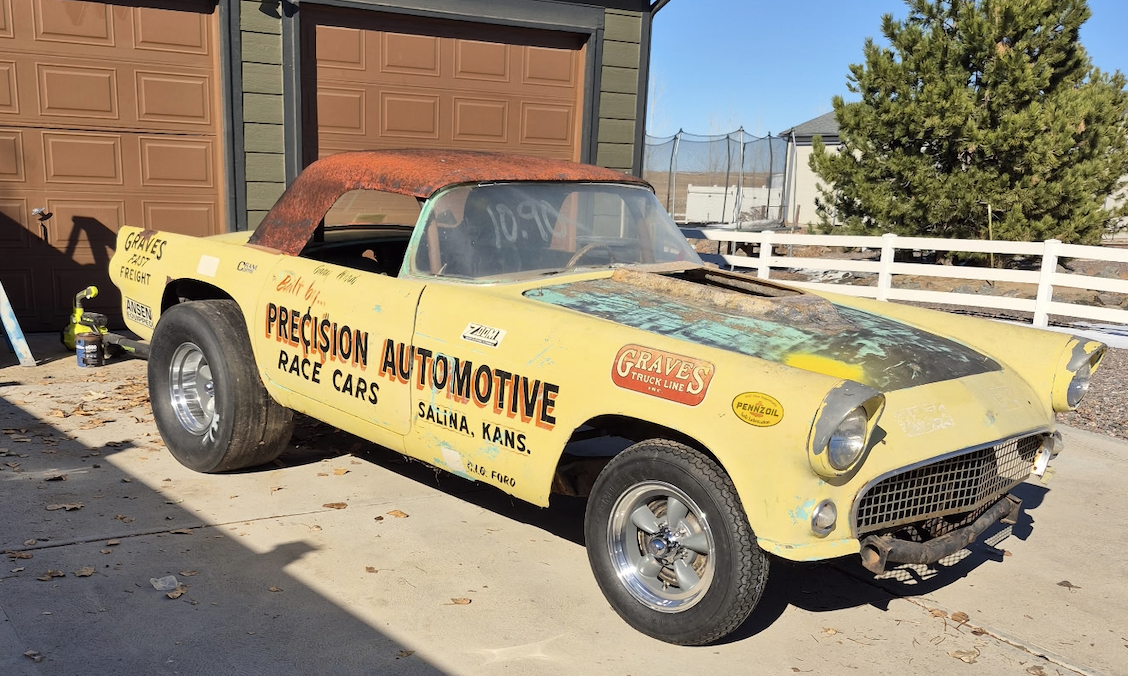
Tweety Bird Comes Home: Historic Salina Drag Car Returning to Salina After Decades Away
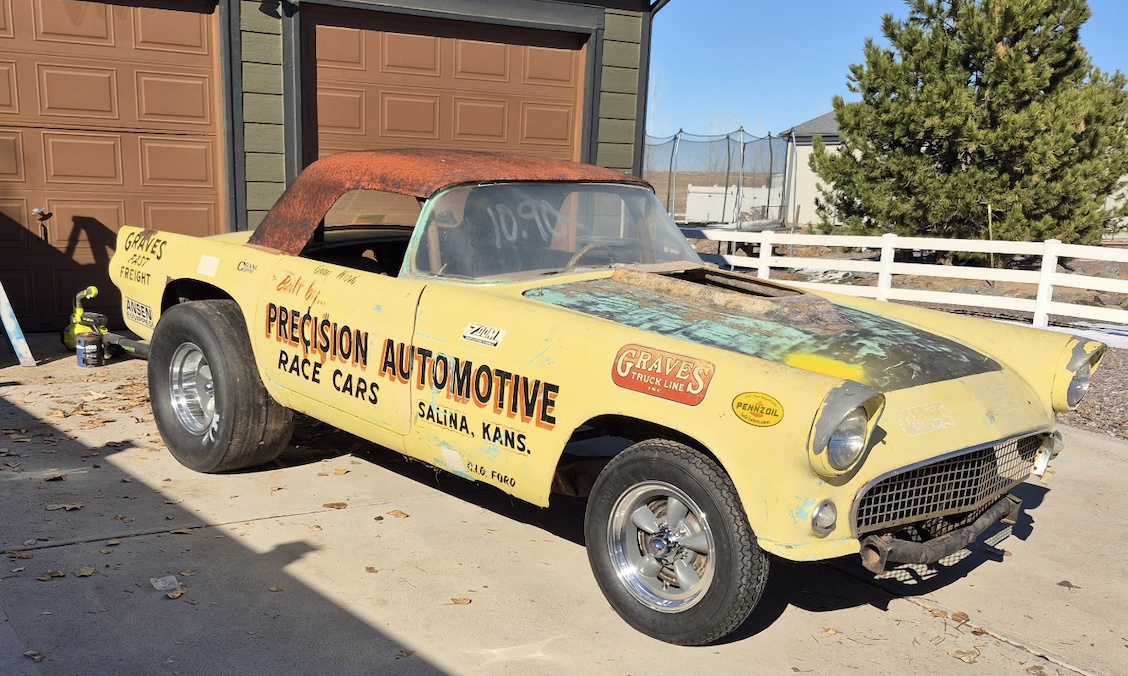
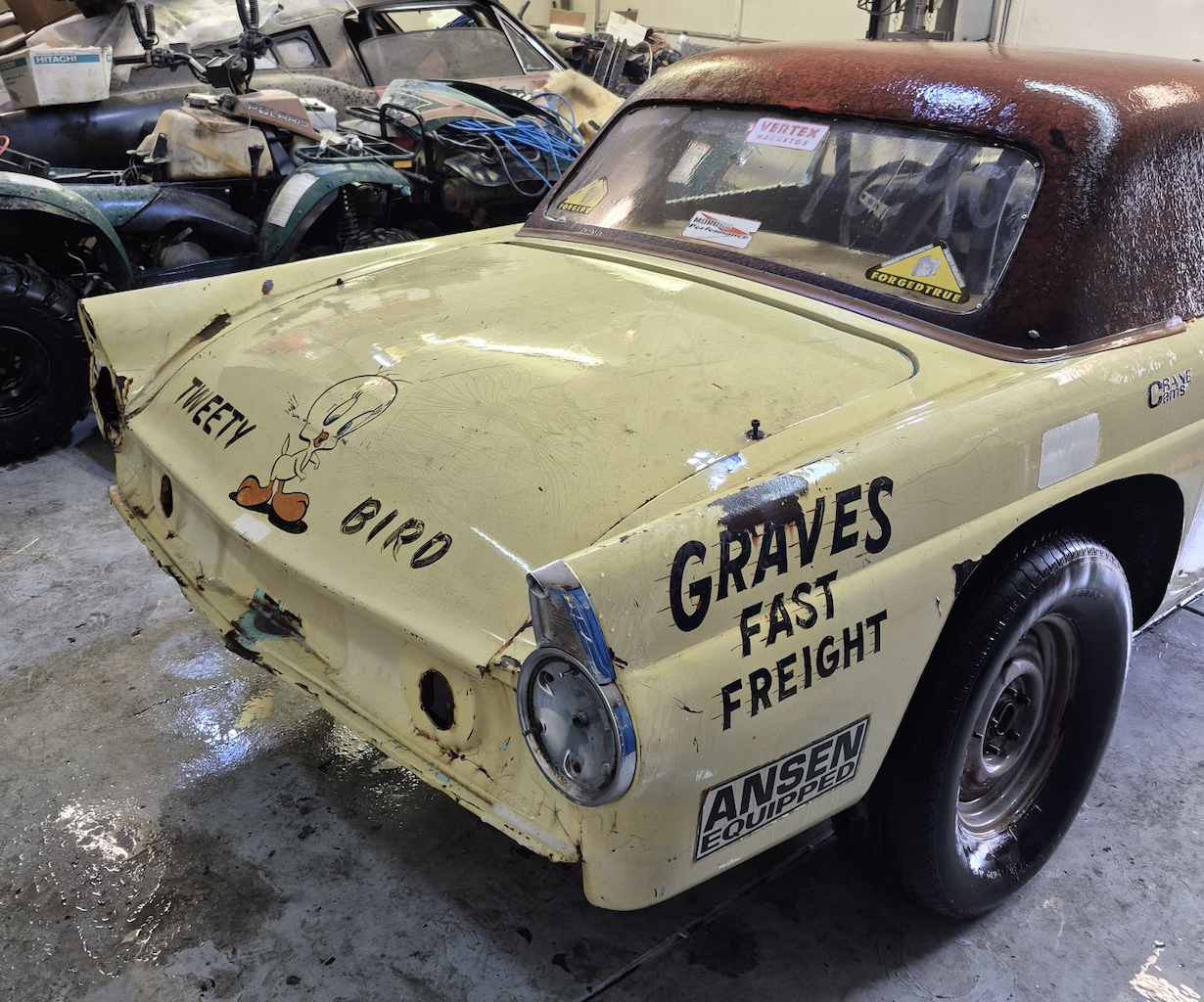
A yellow 1955 Thunderbird with deep Salina roots, a cartoon-inspired name, and a racing history that still gets people talking is making its way back home.
The car is known as Tweety Bird, and for decades it has lived somewhere between local racing legend and long-lost piece of Salina history. It was fast, light, loud, and remembered by people who saw it run during Salina’s drag-racing days in the late 1960s and early 1970s.
Now, after years of storage, scattered memories, old newspaper clippings, and a restoration effort that is still underway, the car is returning to Salina.
In an interview with Salina311’s Joshua Barnhart, Mike Blanton said he has owned the car for 28 years. For much of that time, he knew it had history, but he did not fully understand just how deeply the Thunderbird was tied to Salina.
Blanton bought the car from a friend who was an old racer. Its path to him began at an auction connected to Ward Manufacturing in Salina, where another racer had gone looking for Ford engines. Tweety Bird was included in the lot.
The car eventually ended up at the home of Blanton’s friend in Colorado. Blanton saw it while working on another vehicle and asked about it.
“I said, what, what's the story with that T bird?” Blanton recalled.
His friend did not have all the details, but he knew enough to tell Blanton the car had a reputation.
“He said, I remember when that car raced,” Blanton said. “He said, that car won everything it raced against.”
Blanton bought the car and took it home. For years, it sat on his property and later inside his pole barn.
“I was always going to do something with it,” he said.
Finding the History
Blanton knew the car came from Salina, but finding the full story took years.
He searched online, looked through old racing footage, and tried to find any photo or record that showed the car during its racing years. He spent lunch breaks looking through old video from Kansas tracks, including Topeka, Kansas City, Great Bend and Hays.
“I said, I have been online. I've been trying to find a picture of this car,” Blanton said. “I don't have a picture of his car. I don't know anything about it.”
The search started to change when Blanton’s cousin, Todd, began asking around in Salina. Blanton said Todd later called and told him people immediately recognized the car.
“Everybody's like, holy crap, you got that car,” Blanton said.
A post on a Salina Facebook page asking whether anyone remembered a yellow 1955 Thunderbird named Tweety Bird brought out more stories and photos. Blanton said the response helped confirm that the car still had a following in Salina.
He also contacted the Salina library after hearing that the car had appeared in old newspaper coverage. Blanton asked about searching old newspaper articles from roughly 1968 to 1971. A few weeks later, he received several articles about the car, including coverage of match races and appearances against factory-backed Ford racing teams.
That research eventually led him to Gary Ward, the original owner of Tweety Bird.
Blanton had heard Ward retired in Florida, so he began calling people named Gary Ward until he found the right person. Ward called him back, and the two spoke about the car’s early history.
According to Blanton, Ward bought the Thunderbird in 1966 from a used car lot in Salina. It was not yellow at the time. Blanton described the original color as teal green or baby blue.
Ward bought it to go racing.
Built in Salina
Ward stripped the car down and built it into a serious drag car.
The original racing setup included a Ford 427 side-oiler engine built by Ed Pink, who later became a well-known name in engine building. Blanton said the engine was bored and stroked to about 470 cubic inches and paired with an Art Carr C6 automatic transmission.
When asked how much horsepower the setup would have made, Blanton estimated it was around 575 to 600 horsepower.
“Well, realistically, it was probably around 600 horse, probably,” Blanton said.
The car was also extremely light. Blanton said Ward later rebuilt much of the car in fiberglass after it rolled during its racing life. That part of the story ties directly to Ward Manufacturing, which Blanton said made fiberglass amusement rides, including small cars, boats and motorcycles.
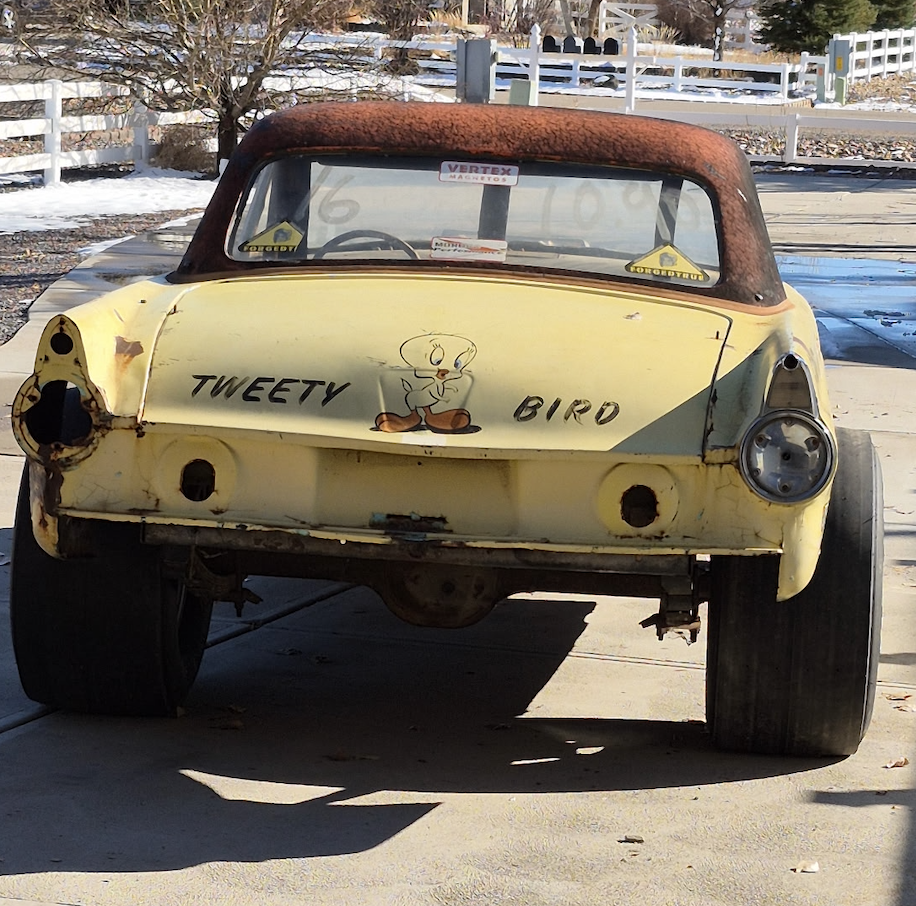
Ward used that fiberglass experience on Tweety Bird. The front clip, roof, doors and trunk lid were all made from fiberglass.
“When he got it all done, it only weighed 1,810 pounds,” Blanton said.
Much of the work was done at Dan Fritz’s Precision Automotive in Salina. That is also where the car became the yellow Tweety Bird that people remember.
The car was painted yellow and given its name. Fritz had a 1957 Chevy named Sylvester, creating a natural match-race theme that helped promote the cars at the track.
Blanton said the theme worked.
“Come, come watch Sylvester try to try to catch the Tweety bird,” Blanton said. “It drew interest, it drew fans.”
That combination helped make the car more than just another race entry. It had a name, a look, and a story people remembered.
Taking on Factory Teams
Old articles and Ward’s own account helped show how competitive Tweety Bird was.
The car match-raced against vehicles from Wichita and other areas. Blanton said one newspaper article promoted Tweety Bird against Ed Terry’s factory-powered Mustang. A later article reported that Tweety Bird won.
Blanton also described a 1971 race involving Jack Roush and a Hemi-powered Pinto. According to Blanton, Ford had come to town with a promotional racing team. After seeing Tweety Bird run, Roush suggested racing the Thunderbird against the Pinto.
The Pinto won, but barely.
“Jack Roush's hemi powered pinto was declared the winner,” Blanton said, “but it was, it was really nip and tuck.”
Blanton said the Pinto ran a 10.80 and Tweety Bird ran a 10.81.
Before that, Tweety Bird had beaten the factory Mustangs in prior years.
The car was not just something people saw at the track. According to Blanton, Ward told him Tweety Bird was not only a drag car. It also had license plates and was driven around Salina.
That is part of what makes the car’s story stand out. It was a drag car, but it was also part of the local street scene. People saw it, remembered it, and kept talking about it years later.
After the Racing Years
After its racing years, Tweety Bird faded from regular public view.
Blanton said people told him they remembered seeing the car displayed on top of a pole at a used car lot. Others remembered it strapped up in the rafters at Ward Manufacturing.
Over time, the car changed hands and eventually left Salina. By the time Blanton bought it, it had already been through years of storage, weather, movement and wear.
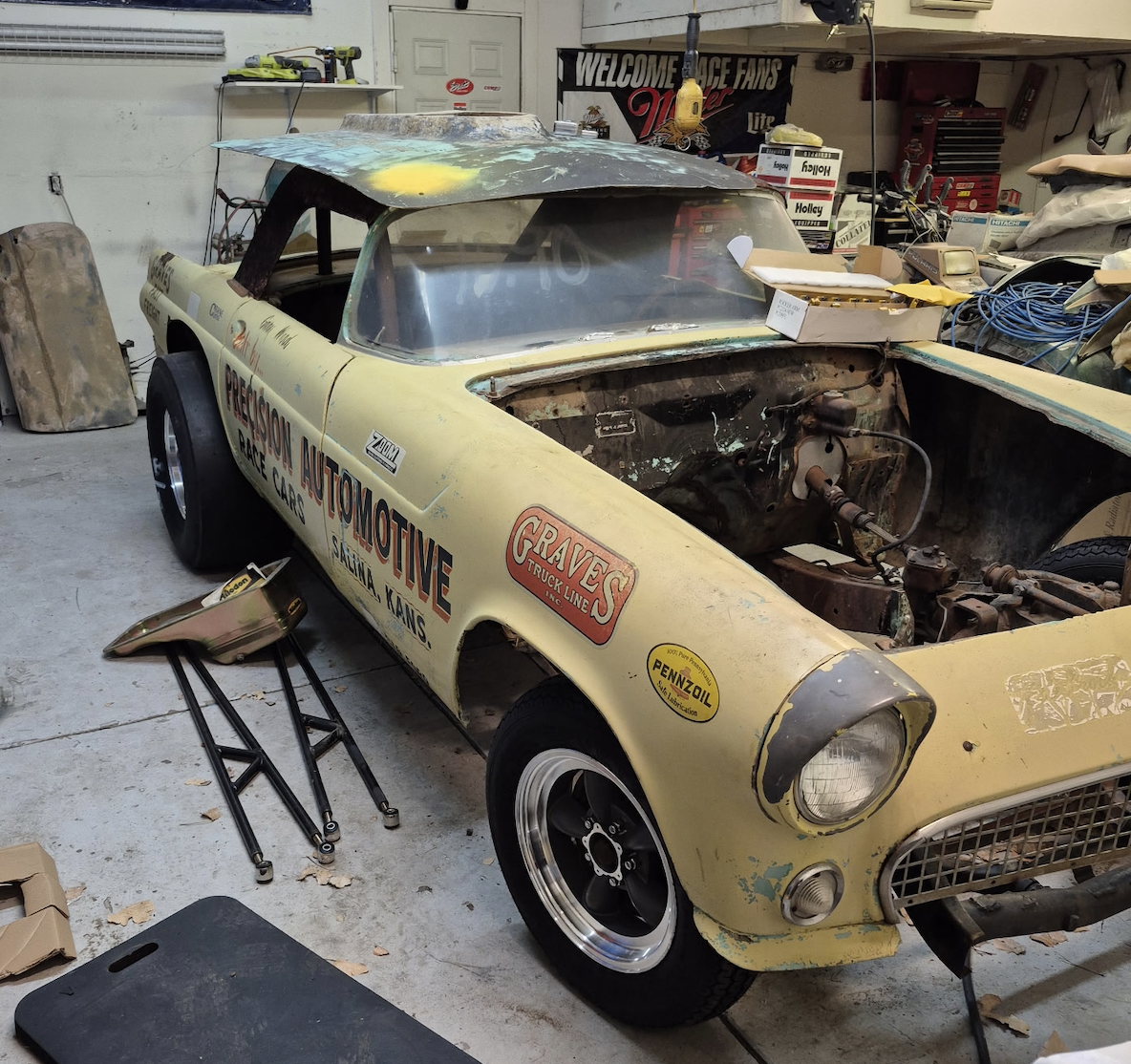
When he decided to bring it back to Salina, the car was far from complete.
“When I started on this car 7 weeks ago, I had a frame and a body,” Blanton said.
It had no brakes, no engine mounts, no electrical system and no fuel system. Blanton has been working to get the car together enough for people to see it again, but the full restoration is still ahead.
“When it gets to Salina, it's not going to be a show car,” Blanton said. “My plan is to fully restore it.”
For now, the car has a 470-cubic-inch Ford engine setup. Blanton said he has the 427 engine for the car and plans to eventually restore it closer to its original Ford-powered racing form.
He has also updated the brakes.
“Before you make them go fast, make them stop good, right?” Blanton said.
The car originally had old Thunderbird drum brakes. As part of the full restoration, he plans to install a certified cage tied into the frame.
Still Searching for Pieces of the Story
Even after years of research, parts of Tweety Bird’s history are still missing.
Blanton is still looking for more photos, especially from the car’s earlier years before it became the yellow version many people remember. He said there are signs of earlier blue or green paint on the car, and he would like to know more about those stages.
“The yellow has chipped off in places,” Blanton said.
The car also had several different engines over the years, including a 429 Ford and later a 327 Chevy with a tunnel ram. Blanton’s goal is to bring it back to the earlier Ford-powered version.
“But I'm restoring it back to its original with the 427 Ford motor,” Blanton said.
For Blanton, bringing Tweety Bird back to Salina is about more than showing an old race car. It is about returning a local piece of history to the place where it made its name.
“It's a neat car,” Blanton said. “It's definitely got a big following… around Salina.”
Tweety Bird is expected to be in Salina next weekend at the old dragstrip on May 3rd for