Salina Remembered: The Civil War's 'Mother' to Soldiers Once Ran a Salina Eating House
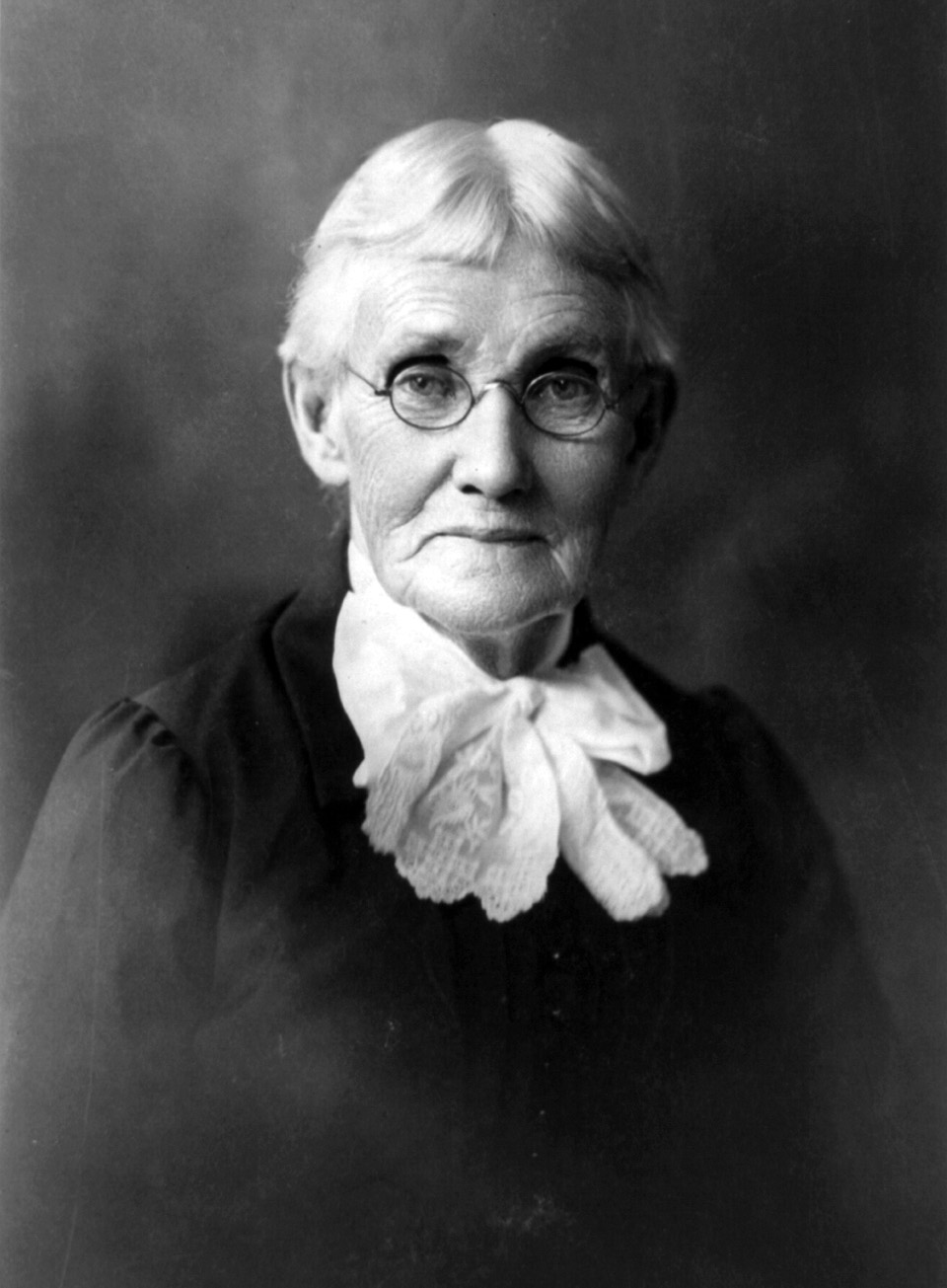
Mary Ann "Mother" Bickerdyke died 125 years ago, on Nov. 8, 1901. After the war, she helped hundreds of veteran families settle in Kansas and set up shop in frontier Salina.
She went to war carrying $500 worth of hospital supplies from Galesburg, Illinois. By the time it ended, generals had praised her by name, and soldiers called her "Mother."
A few years later, she was running an eating house in Salina.
Mary Ann Bickerdyke was born July 19, 1817, near Mount Vernon, Ohio. She attended Oberlin College and worked as a nurse in Cincinnati before marrying Robert Bickerdyke in 1847. The family moved to Galesburg in 1856, and her husband died about two years later, leaving her to raise two sons, James and Hiram.
When the Civil War began, a surgeon with the 22nd Illinois Infantry wrote home about sick soldiers going without proper care. Galesburg residents gathered supplies, and Bickerdyke took them to the Army hospital at Cairo, Illinois. In November 1861, she became matron of the general hospital there.
She stayed with the Union's western armies for the rest of the war. She worked in field hospitals after Fort Donelson and Shiloh, then followed the troops through the Corinth and Atlanta campaigns. A 1912 history of Kansas says she often walked battlefields at night with a lantern, looking for wounded men who had been missed. The same history quotes Gen. Alexander McCook calling her "worth more to the Union army than many of us generals." It says she was a great favorite of Gens. William T. Sherman and John A. Logan.
When Sherman's army marched in the Grand Review in Washington in May 1865, she rode a saddle horse ahead of the 15th Army Corps, wearing a calico dress and a sunbonnet, according to an 1886 biography. Her friend Florence Kellogg wrote in 1907 that Bickerdyke turned down a place of honor beside Mrs. Sherman and soon left the ranks to tend tired soldiers. Kellogg quoted her: "I never considered myself ornamental or worth making a show of, but I can be useful and that's all I want."
After she was released from duty in March 1866, she found the cities full of discharged soldiers who couldn't find work. Veterans had special rights to claim public land, and Bickerdyke turned her attention to Kansas.
In the summer of 1867, she took a leave from her job at a Chicago charity home and went to see Kansas for herself, Kellogg wrote. What she saw pleased her. Back in Chicago, she asked wealthy friends for help. The 1912 Kansas history says banker Jonathan Burr gave her $10,000, and the president of the Chicago, Burlington & Quincy Railroad promised veterans and their families free transportation for two years. It also says Sherman let her use government teams to haul the families and their belongings to their homesteads.
Both the 1907 and 1912 accounts say more than 300 families settled in Kansas through her efforts within about two years.
She followed them. Kellogg wrote that Bickerdyke moved to Salina, "then a frontier town of comparatively few inhabitants," with her two sons and started an eating house that became known as "The Mother Bickerdyke Home." The 1912 history calls it a hotel known as the Bickerdyke House.
The business didn't last. Kellogg, who knew her, wrote that while Bickerdyke had rare executive ability, "there was yet something lacking in her financial management." She guessed that it was Bickerdyke's quick generosity whenever someone told her a sad story, or that she "did not enforce the 'pay-as-you-go' rule sufficiently." In later years, the story has often been told that she lost the place because she wouldn't collect rent from boarders who had no money. Whatever the cause, Kellogg wrote, she gave up the Salina venture in 1869 and went to New York to do mission work.
Kansas wasn't done with her. After raids on frontier settlements in 1868, she pressed the government for help, and the 1912 history credits her efforts with the War Department's issuing rations for 500 people for 10 months. She returned in 1874 to live with her sons on a ranch near Great Bend, just as grasshoppers wiped out crops across the state, and she made several trips to Illinois to ask for aid for Kansas settlers.
She later worked at the U.S. Mint in San Francisco and helped more than 300 Army nurses get pensions, according to the 1912 history. Her own pension was $25 a month and came years after the war.
In 1897, the Woman's Relief Corps named its home near Ellsworth for widows and daughters of Civil War veterans the Mother Bickerdyke Home and Hospital, according to the Kansas Historical Society. The Kansas Historical Society honored her in 1895, its Kansapedia entry says.
She died Nov. 8, 1901, at Bunker Hill, at her son's home, at age 84. She was buried beside her husband in Galesburg's Linwood Cemetery.
Photo: Library of Congress