KDHE Tests Find Salina Water Within Standards as Residents Continue Raising Concerns
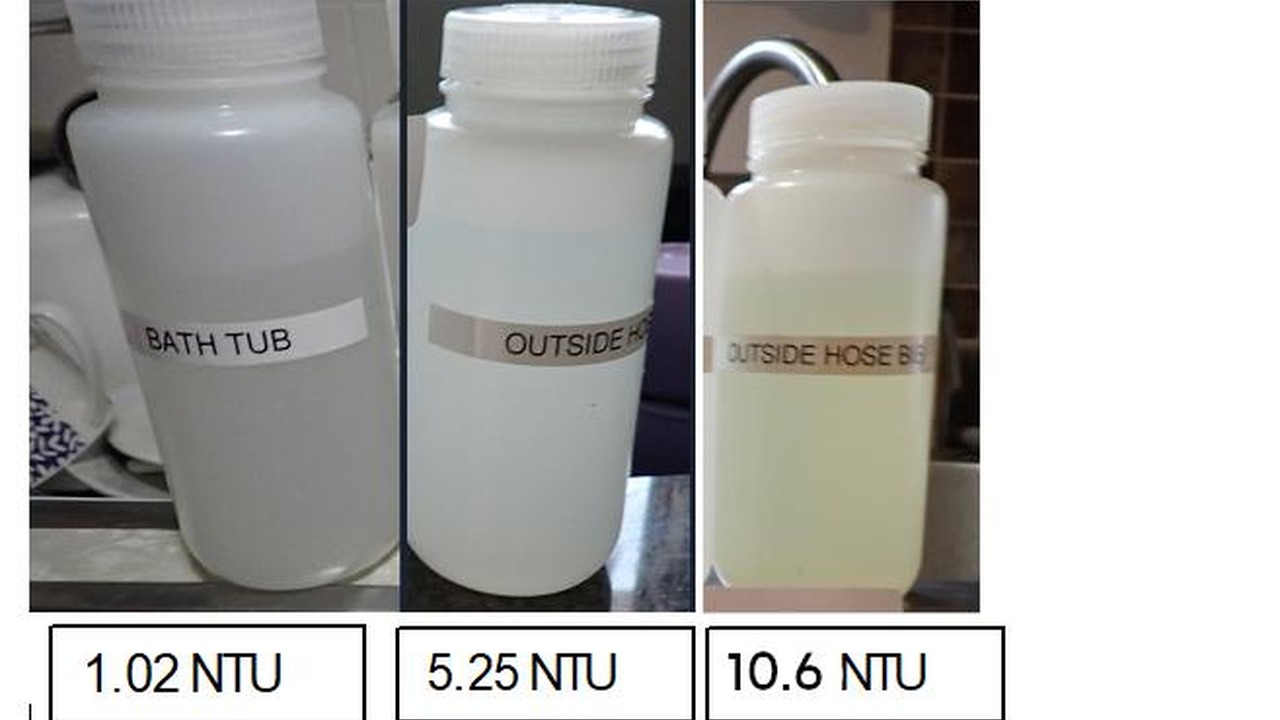
Concern about Salina’s water quality has intensified as residents have shared photographs of discolored water, troubling-looking pipes and results from at-home water tests. New testing released by the Kansas Department of Health and Environment found no sampled contaminant above established health or appearance-based limits, but the results are unlikely to end questions from residents who continue to see water they consider unacceptable coming from their taps.
KDHE tested water samples collected from residences on Dover Drive after complaints from residents. According to an August 31 City of Salina news release, tests found E. coli and coliform bacteria were absent. Ion and metal testing also found no result above the Environmental Protection Agency’s health-based Maximum Contaminant Levels.
Some detected substances do not have enforceable health limits but are covered by Secondary Maximum Contaminant Levels, which address taste, odor and appearance. The city said none of the tested contaminants exceeded those secondary standards either.
The laboratory results provide an important measure of the sampled water’s safety. They do not erase what residents have been seeing, however. Cloudy, yellow or brown water—and photographs showing buildup or corrosion in plumbing—can understandably undermine confidence even when a limited set of samples meets regulatory standards. At-home tests can also differ in accuracy and scope from certified laboratory testing, making follow-up testing and transparent explanation especially important.
City tested 46 properties for turbidity
City staff separately performed turbidity testing at 46 properties, usually checking the kitchen cold-water tap, a bathroom cold-water tap and an outside hose bib. Turbidity measures cloudiness caused by suspended material and is the focus of Salina’s temporary relief policy for customers reporting discolored water.
A chart released by the city shows 135 tests across the three locations. Most readings were between zero and 5 nephelometric turbidity units. Eight readings exceeded 10 NTU: three bathroom readings and five hose-bib readings. No kitchen reading exceeded 10 NTU.
The city said that in each instance above 10 NTU, staff concluded the cause was not the public water system because the elevated reading appeared at only one location on the property or because the property had been unoccupied for several months. Customers were asked to contact the city again while discoloration was occurring so staff could retest at that time.
That distinction is central to the ongoing disagreement. The city’s findings point toward conditions inside individual properties in those cases, while residents’ photographs and household observations have fueled broader concern about the distribution system and the condition of water infrastructure.
Relief policy has multiple requirements
To qualify for Salina’s Residential Pilot Water Quality Temporary Relief Policy, an account holder must file a complaint, allow up to three rounds of testing while present and record at least one turbidity reading above 10 NTU. The city must also determine that the condition comes from the public distribution system rather than private plumbing. Customers receiving relief must remain available for periodic follow-up testing.
The city acknowledged that some residents affected by discolored water feel their concerns have not been heard. Officials said the city will continue testing and retesting affected properties and use complaint information to identify where system improvements are most needed.
Residents experiencing discolored water can contact the City of Salina at 785-309-5735, email [email protected] or visit Room 206 at 300 W. Ash St. The city asks residents to report the problem while discoloration is occurring so staff can test the water under the conditions being reported.
Source: City of Salina news release and Kansas Department of Health and Environment testing released August 31, 2026. The official release includes links to the underlying bacteria, metals and anion test results.
Want this story in print?
We'll print this story on the cover and inside of a keepsake 4-page paper, then package it and ship it right to your door.
Sign in to save 10% — paid members save 20%.